

If you have been rinsing your sinuses with a neti pot for years and wondering whether the NeilMed Sinus Rinse is worth switching to, the short answer is yes, with one honest caveat. I used a ceramic neti pot on and off for the better part of a decade before I bought the NeilMed Sinus Rinse kit with my own money back in March and used it every night since. My first pot was a plain ceramic one I picked up at a pharmacy, and I nearly gave up on it twice before I got the hang of the tilt. Both do the same basic job: warm salt water through one nostril, out the other, clearing out whatever has built up during the day. They are not the same experience, though. The neti pot asks something of you every time you use it. The NeilMed bottle does half the thinking for you, and for a guy who just wants to clear his nose before bed without a production at the sink, that difference mattered more than I expected. I kept both on the bathroom shelf for the first month, switching back and forth so I could compare them fairly, and I took notes in a little spiral notebook. By the end of that month, the notebook had the answer written all over it.
A quick word on why I bother at all. I am Wendell, 59, a retired electric utility lineman who snored for twenty years before my wife Darlene noticed me stopping breathing in my sleep. A sleep study showed moderate obstructive sleep apnea, and my doctor put me on a CPAP. The machine helps, but when my nose is stuffy, the air has nowhere to go and I wake up with a dry mouth and a headache. Rinsing before bed has been the single most useful add-on to my CPAP routine. The NeilMed box says the rinse helps with nasal irritation from occupational dust, fumes, animal dander, grass, pollen, smoke, smog and house dust. After 30 years climbing poles and working around diesel exhaust, transformer oil and fiberglass dust, that list reads like my work history. I started rinsing because of the CPAP, but I kept rinsing because of how much better my nose felt the next morning. This is not medical advice, and nothing here replaces a sleep study or a prescribed CPAP. It is just what worked for me.
| NeilMed Sinus Rinse | Neti Pot | |
|---|---|---|
| How it delivers the rinse | Squeeze bottle pushes the solution through with gentle pressure you control | Gravity does the work as you pour from the spout, and the flow depends on your tilt |
| Ease of getting the angle right | The bottle tip and squeeze action make it forgiving for a beginner | Takes practice to find the tilt that keeps the water from running down your chin |
| Control over pressure | You control the flow with your own hand, so you can go gentle or firm | You control the pour, but it is easier to go too fast and end up sputtering |
| Learning curve | A few tries and it felt natural. I had it down by the third night | Took me a couple of weeks to get it right without sputtering, and even then I had off nights |
| Cleaning | Squeeze bottle rinses out in seconds and air dries on the counter | Ceramic pot needs care and can chip if you drop it |
| What it costs to keep using | You buy refill packets, which adds a recurring cost | Once you own the pot, you mix your own salt and soda, so it is cheaper over time |
| Best for | People who want a consistent rinse before bed every night | People who like the traditional low-tech ritual and do not mind the practice |
Where NeilMed Wins
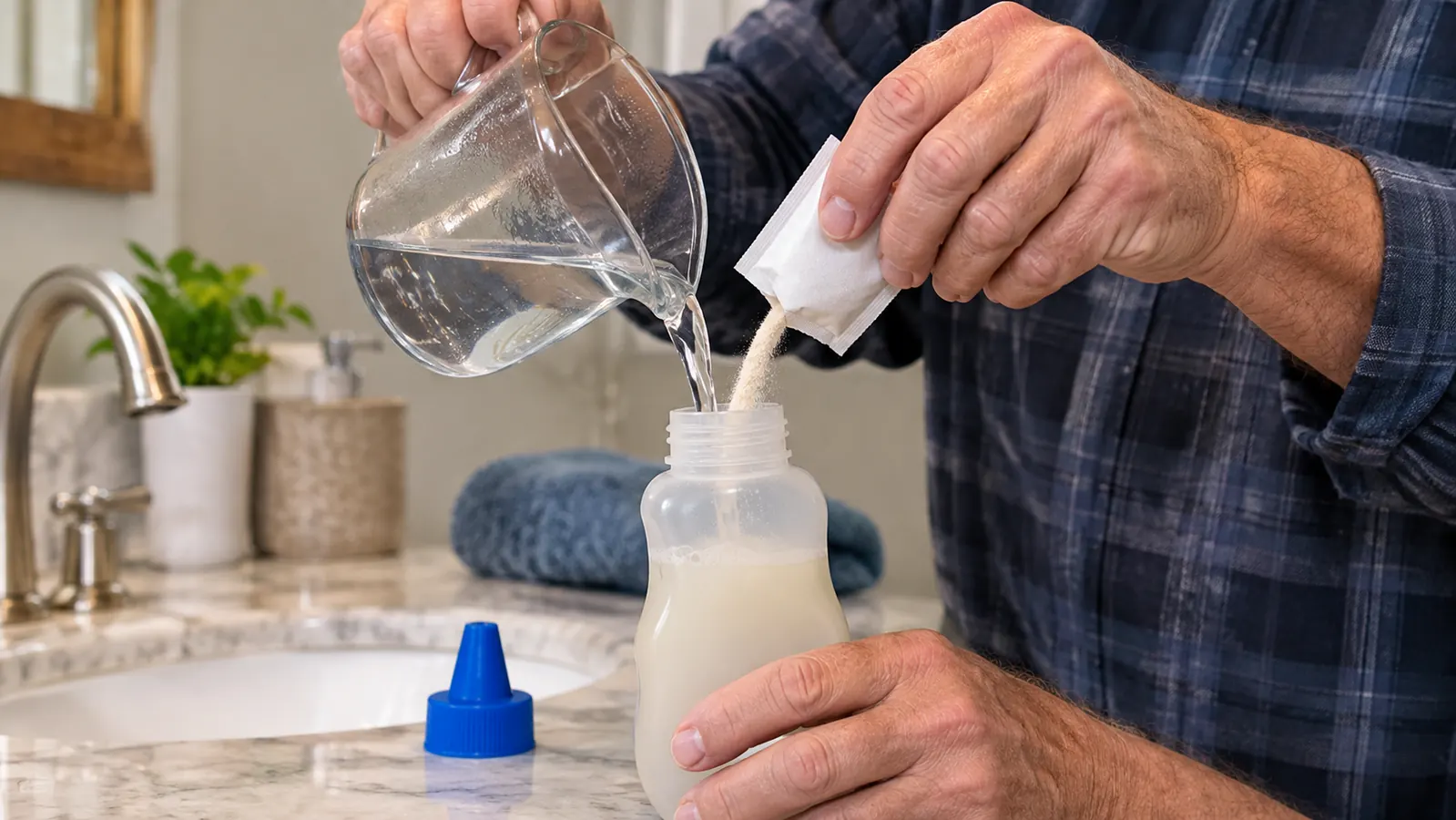
The NeilMed Sinus Rinse wins on the thing that actually kept me using it: the squeeze bottle does half the thinking for you. With the neti pot, I had to tilt my head just right, breathe through my mouth, and pour slowly enough that the water did not just spill out. Some nights I got it right. Other nights I stood there with salt water running down my chin, wondering why I bothered. The first night I used the NeilMed kit, I filled the squeeze bottle with warm water, dumped in a packet, gave it a shake, and leaned over the sink. The water came out at a gentle pressure I controlled with my own hand, and it went where it was supposed to go. No sputtering, no guessing at the angle, no mess. I did it again the next night and the night after that. By the end of the first week, it felt as routine as brushing my teeth, and I stopped skipping nights the way I used to skip the neti pot. That matters more than it sounds. A rinse you skip is a rinse that does not work. The whole rinse takes me about a minute from filling the bottle to rinsing it out. The neti pot, with the measuring and the slow pouring, always took longer, and longer meant I was more likely to skip it on a tired night. One night in the middle of May I came home late from a ball game, tired enough that I almost went straight to bed. The old me would have skipped the rinse and paid for it at 2 a.m. Instead I filled the bottle, and a minute later I was done. That is the kind of difference that does not show up on a spec sheet.
It also wins on consistency. The kit comes with 50 packets of the premixed saline blend, so every rinse is exactly the same strength. With my old neti pot, I mixed my own salt and soda, and I am not ashamed to say I guessed more than I measured. Some rinses were too salty, some were too weak, and a few were just unpleasant enough that I skipped the whole thing. With the NeilMed bottle I learned to test the water temperature on my wrist before I poured it in, the way you test a baby bottle, and I never once shocked my nose. The premixed packets took the guesswork out entirely, and the rinse was the same strength on night one as it was on night fifty. The NeilMed Sinus Rinse is preservative, iodine and latex free, which mattered to me because my nose is already irritated enough from years of snoring and CPAP air. The box also says it helps with nasal allergies and dryness. I cannot speak to allergies, but the dryness part I can confirm: my nose feels less parched on nights I rinse, and the CPAP air does not bother me as much. One night in late April, after a long day of yard work with the pollen heavy, I rinsed before bed and the congestion broke up within a minute. My CPAP mask sealed the way it was supposed to, and I woke up without the dry mouth I used to get. That was the night I stopped thinking of the NeilMed kit as a new gadget and started thinking of it as part of my routine, the same way I think of the CPAP itself.
Where the Neti Pot Wins
I am not going to pretend the neti pot has no place on the shelf. It wins on cost over the long run, plain and simple. Once you own the pot, you mix your own salt and baking soda, and a box of each lasts for months. The NeilMed Sinus Rinse works beautifully, but you are buying refill packets forever. If money is tight and you already own a neti pot, you can get the same basic nasal irrigation for a fraction of the cost. That is a real advantage, and I would not argue with anyone who chooses it for that reason. I still have the box of salt and the box of baking soda I bought back in March, barely touched, because I switched before I made a dent in them. That alone tells you how cheap the pot is to run, and for a daily rinse that adds up over a year. My own pot is still sitting on the bathroom shelf, perfectly good. I did not replace it because it broke. I replaced it because I stopped using it, and I stopped using it because the NeilMed bottle made the same job easier. If you already have a pot and a system that works, switching to something that costs more per rinse is a hard sell, and I get that. If you are the kind of person who does not mind a little measuring and a little practice, the neti pot will treat you fine.
The neti pot also wins for people who like the traditional ritual. There is something calming about the slow pour, the warm water, the quiet minute at the sink. Darlene says I look like I am performing some kind of ceremony, and she is not wrong. The NeilMed bottle is faster and more practical, but it feels more like a chore. There were nights, especially last winter, when the slow pour felt like the only thing that opened my nose enough for the CPAP. I remember one cold night in February when I stood at the sink for a good five minutes with that pot, and the relief carried me through most of the night. The NeilMed bottle never gave me a moment like that, but it also never gave me a reason to skip it. Here is the honest part, though: the neti pot worked fine once I learned the angle. The problem was never the pot. It was me. On busy nights I would skip it because it took focus, and skipping it meant a stuffy nose and a bad night with the CPAP. The NeilMed bottle removed that excuse. There were nights I would stand at the sink with the pot in my hand and think, do I really need this tonight? With the NeilMed bottle I never had that thought, because the whole thing was over before I finished thinking about it. If you have used a neti pot for years and it works for you, do not let me talk you into switching just because I did. You are not doing anything wrong. The NeilMed bottle is easier for me, and that is the whole argument.
The neti pot worked when I got the angle right. The NeilMed bottle worked every single night, and that consistency is what actually cleared my nose before the CPAP went on.
Want the rinse that made me ditch my neti pot?
The NeilMed Sinus Rinse kit is the one I reach for every night before the CPAP goes on. It cleared my nose, cut down on the dry mouth, and made the rinse so easy I stopped skipping it. Check today's price on Amazon and see if it works as well for you as it did for me.
Amazon Check Today's Price on Amazon →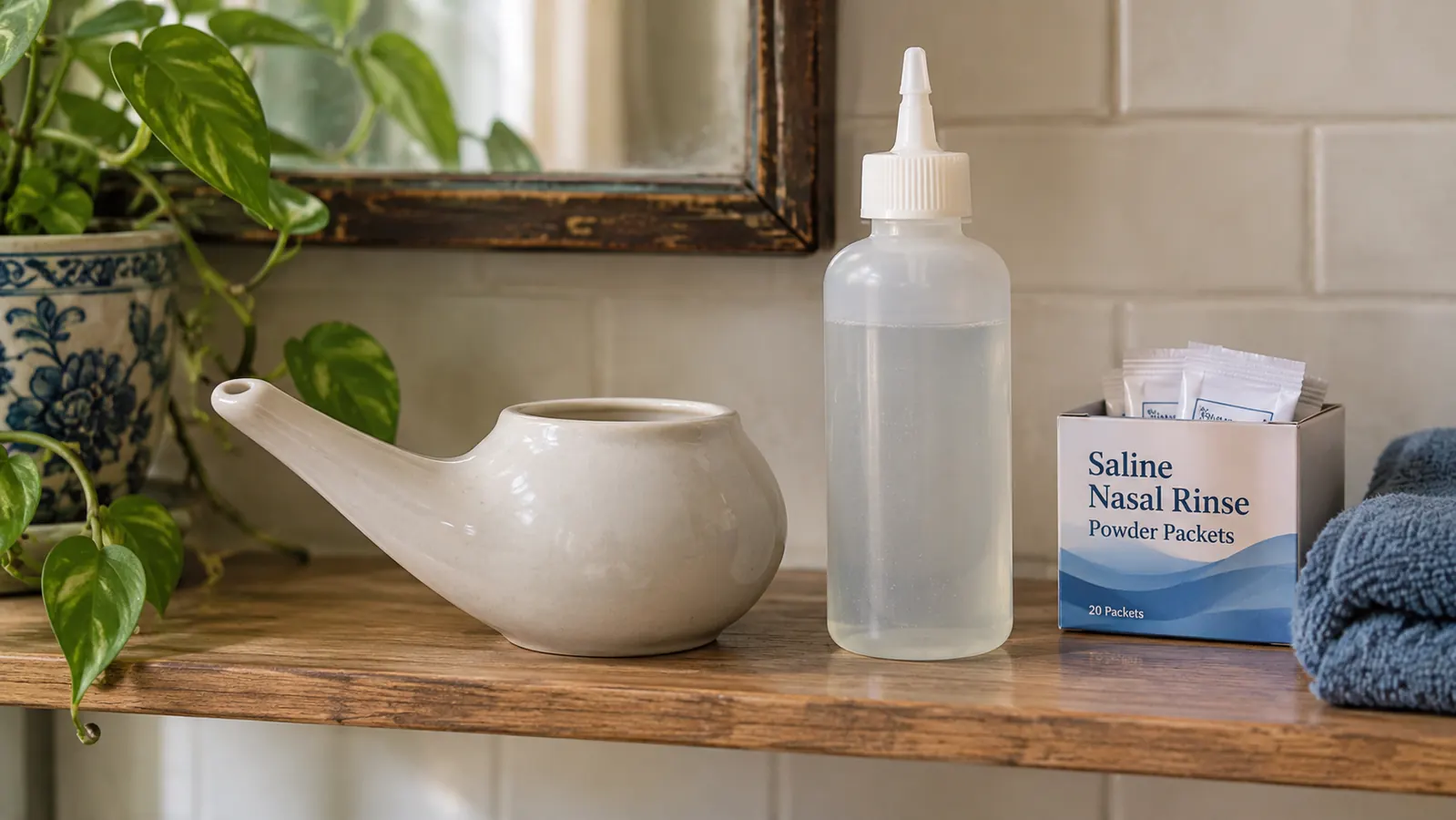
Who Should Buy Which
Buy the NeilMed Sinus Rinse if you want a rinse that is quick, consistent, and hard to mess up. It is the better choice if you are new to nasal irrigation, if you have tried a neti pot and never quite got the hang of it, or if you want the same result every single night before bed. It is also the better choice if you are a CPAP user like me, because a dependable rinse means fewer nights of dry mouth and a mask that does not seal. The 50 count kit gives you a solid run of nearly two months if you rinse once a night, and the packets make it easy to keep the routine going when you travel. I packed it for an overnight trip in June and it fit in my bag without a fuss. And if you travel with a CPAP like I do, the packets are flat and light, which beats hauling a ceramic pot in a suitcase. The whole kit is 6.25 by 5.75 by 2.5 inches and weighs 10.24 ounces, so it does not take over the shelf or the suitcase.
Stick with a neti pot if you already own one, you have the angle down, and you do not mind mixing your own solution. It is gentler on the wallet over time and it works. The NeilMed Sinus Rinse is not magic. It is just a squeeze bottle with a premixed packet, and the only real reason to switch is the same reason I switched: it made the rinse so easy that I actually did it every night. If you are on the fence, try the NeilMed kit once. Worst case, you are out the cost of a kit and you know for sure. You can always switch later if the pot stops feeling worth the trouble. That is exactly what I did. And if you have never tried any form of nasal irrigation, do yourself a favor and mention it to your doctor before you start. I am not a medical professional. I am just a guy who sleeps better with a clear nose, and I would rather you hear that from your doctor than from me.
Eight months in, I am not going back to the pot
The NeilMed Sinus Rinse is the one that made the habit stick for me. If you are tired of sputtering over the sink or skipping the rinse altogether, check today's price on Amazon and decide for yourself.
Amazon Check Today's Price on Amazon →