
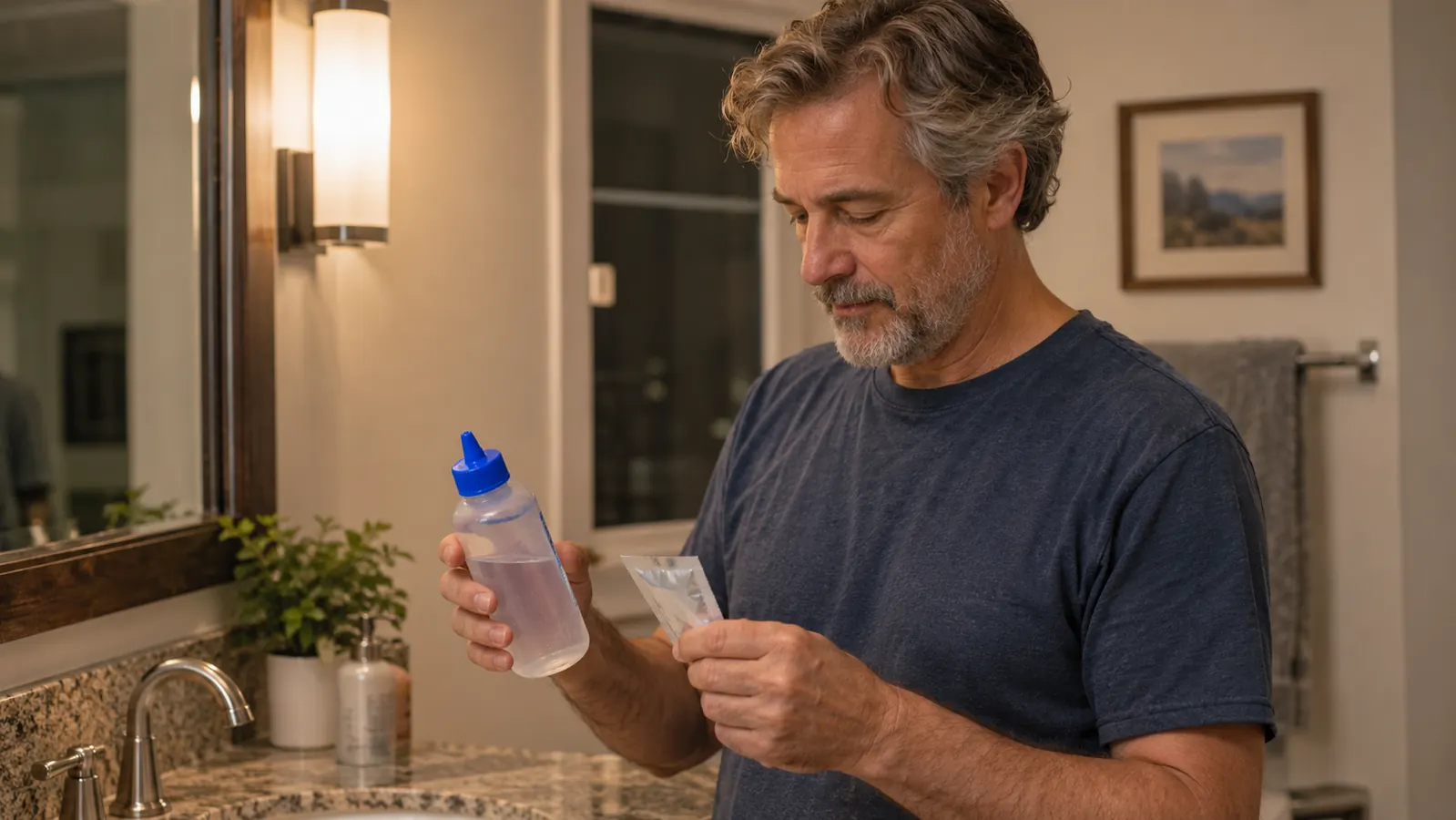
I will tell you exactly why I bought the NeilMed Sinus Rinse kit, and it was not because I wanted to irrigate anything. It was because Darlene had already moved to the couch once, my CPAP was sitting on my nightstand, and I was still waking up with a mouth like a cotton bale. My doctor had said the words 'moderate obstructive sleep apnea' after my sleep study two years ago, and the machine fixed the apnea part. It did not fix the part where I breathe through my mouth whenever my nose feels stuffed, which is most nights. So I bought the NeilMed Sinus Rinse kit, 50 count, and I have used it nearly every evening for eight months.
This is not medical advice. Snoring can be a sign of sleep apnea, sleep apnea is a medical condition only a doctor can diagnose and treat, and no rinse replaces a sleep study or a prescribed CPAP. What I can give you is a plain-spoken account of what the NeilMed Sinus Rinse did for me and what it did not do, after 240 or so rinses.
The Quick Verdict
The NeilMed Sinus Rinse kit is the one bedtime step I have kept for eight months straight. It clears my nose before the CPAP goes on, cuts the dry-mouth mornings, and the 50-count box means I am never hunting for a refill.
Amazon Check Today's Price →Eight months in, this is the rinse I still reach for every night
The NeilMed Sinus Rinse kit is a complete nasal rinse system in one box: the squeeze bottle and 50 packets of preservative-free, iodine-free, latex-free saline mix. Check today's price on Amazon and see if it earns a spot on your nightstand.
Amazon Check Today's Price on Amazon →How I've Used It
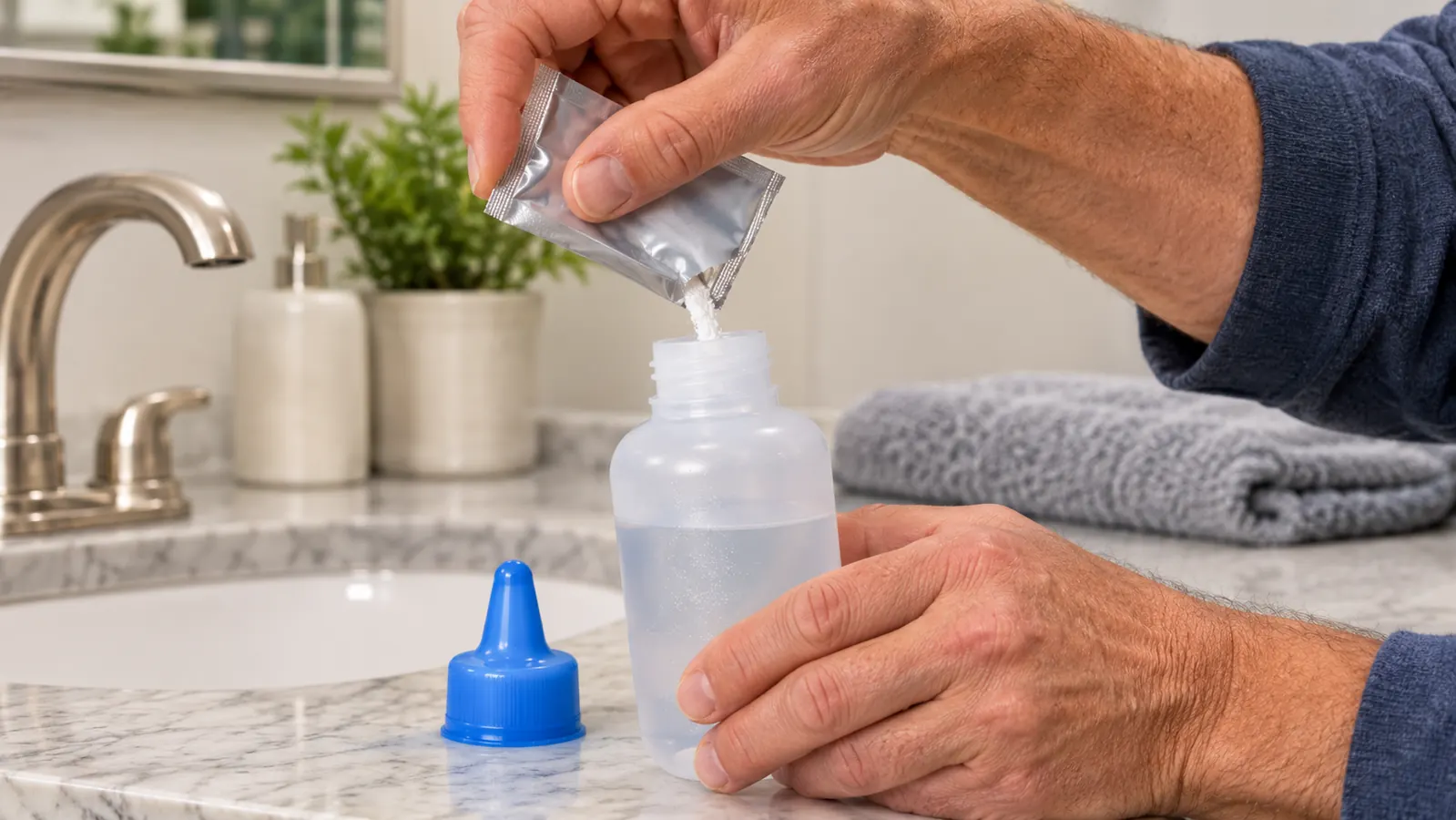
I do the rinse in the bathroom right before bed, after I brush my teeth and before I put the CPAP mask on. I fill the squeeze bottle with distilled water warmed in the microwave for about fifteen seconds, pour in one packet of the NeilMed saline mix, shake it, and lean over the sink. The bottle does the work. You squeeze gently, the water goes in one nostril and comes out the other, and you switch sides. The whole thing takes me about three minutes, and I have done it so often that I do not think about it anymore.
The kit is a Volume Therapeutic Saline Nasal Irrigation and Moisturizing System, which is a long way of saying it is a squeeze bottle and a box of mix. The 50 count has lasted me about eight months because I use one packet a night, and I still have a few left. I keep the bottle on the bathroom counter and the extra packets in the medicine cabinet. The bottle measures about 6.25 x 5.75 x 2.5 inches and weighs a little over ten ounces with the box, so it does not take over the counter.
I started the first week of March, the same week the CPAP supply company delivered a new mask. The first night I warmed the water too long and it came out hot, so now I heat it for fifteen seconds and test a drop on my wrist like a baby bottle. I lean over the sink with my head tilted to one side, and I have learned to squeeze slow. A fast squeeze just runs the water down the back of my throat. A slow squeeze lets it wash through and come out the other nostril on its own, and that is the whole trick.
I will be honest about the first week. The first rinse felt strange, like getting water up your nose on purpose, which is exactly what it is. I tilted my head wrong once and coughed for a minute. By the third night I had the rhythm, and by the end of the first month I could do it without looking in the mirror. If you have ever used a Neti pot, the idea is the same, but the squeeze bottle gives you a gentle push instead of relying on gravity.
What the NeilMed Sinus Rinse Actually Does for a CPAP User
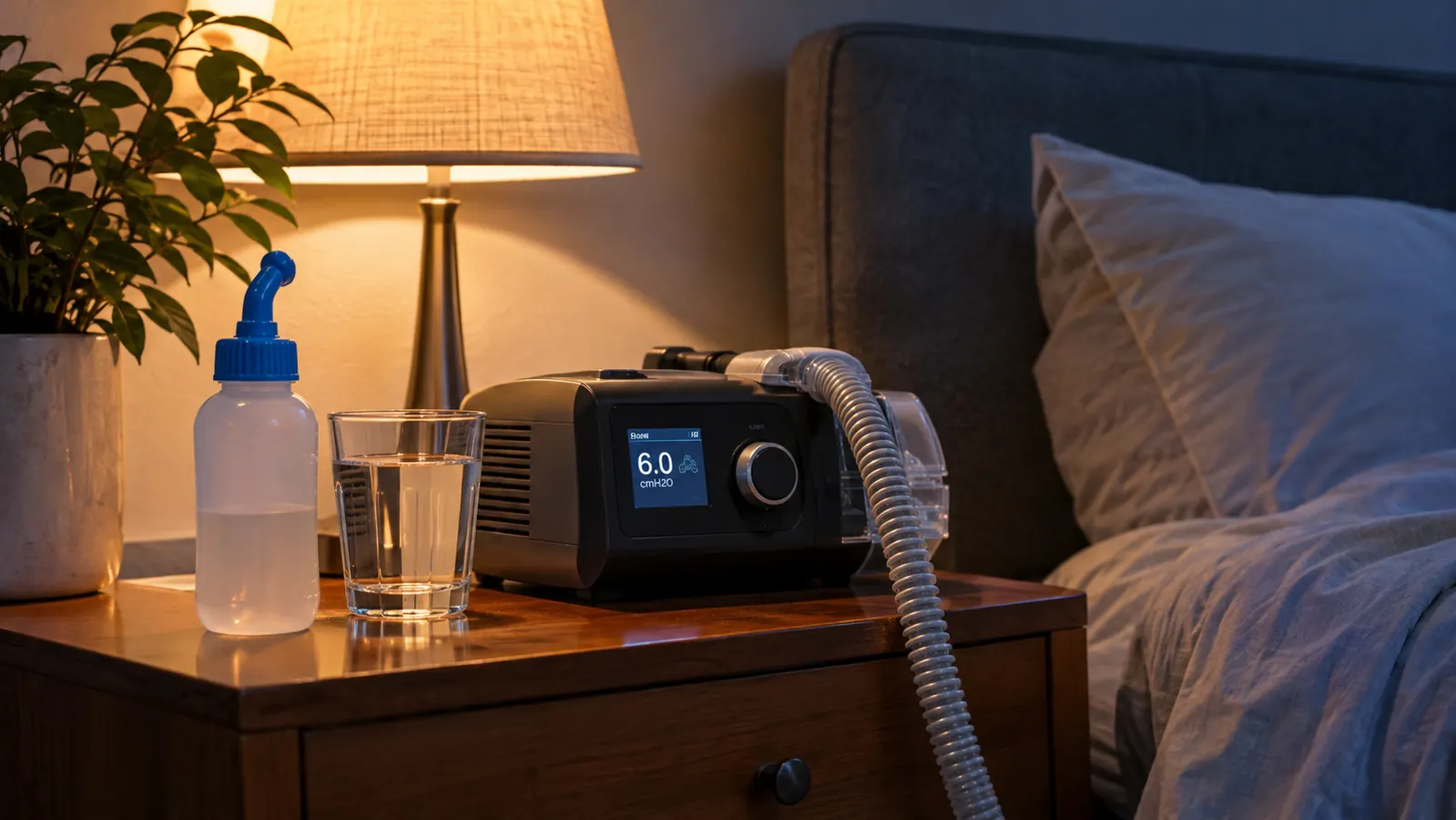
Here is the part I did not expect. The NeilMed Sinus Rinse is sold for nasal allergies, dryness, congestion, post nasal drip, and irritation from dust, fumes, pollen, smoke, and animal dander. I bought it for the congestion. What it actually helped most was the dry mouth. When my nose is clear, I keep my mouth shut at night, and the CPAP does its job without me waking up feeling like I swallowed a handful of sand.
Darlene noticed before I did. She moved back into the bedroom full time around the second month, and she is the one who said I was not mouth-breathing as much. I had not realized how often I was waking up, not fully, just enough to roll over and swallow. Those little wake-ups dropped off once I started rinsing every night. I cannot tell you the rinse cured anything, because it did not. I can tell you it made the nightly routine of CPAP easier to tolerate, and that is worth a lot to me.
I keep a rough count because it is the only number that matters to me. Before the rinse I woke up with a dry mouth five or six mornings out of seven, and I would lie there working my tongue around, trying to get enough spit to swallow. By the third month that was down to two mornings a week. By the sixth month it was one, and usually on a night I had skipped the rinse or fallen asleep without it. My CPAP shows me a leak number every morning, and on rinse nights it sits lower. The machine does not know I rinsed. The number just reflects that my mouth stayed shut.
The mix itself is plain saline. The box says it is preservative free, iodine free, and latex free, which matters to me because I have sensitive skin and I do not want extra chemicals sitting in my nose all night. There is no medicine in it, no decongestant, no steroid. It is salt water, essentially, and that is exactly why I trust it for nightly use. It rinses the gunk out and moisturizes the lining, and then it is done.
The rinse did not cure my apnea and I never expected it to. It cleared my nose so the CPAP could do its job, and the dry-mouth mornings dropped from almost every day to maybe one a week.
Eight Months of Evening Rinses: What Changed and What Did Not
Month one was the adjustment. I rinsed, I coughed, I learned the head tilt, and I nearly gave up on night four because it felt like a hassle. I am glad I did not. By month two the rinse was as routine as flossing, and Darlene had stopped sleeping on the couch. By month three I noticed I was reaching for the water glass less at night. By month six I could tell the difference on nights I skipped the rinse, which I did maybe once a week when I got home late. Those nights I would wake up with a dry mouth and a stuffy nose, and the CPAP would feel like it was working against me instead of with me.
The worst night was in late April, when the pollen count was high enough that the evening news mentioned it. I had rinsed the night before but skipped that evening because we had company, and I paid for it. I woke up at two in the morning with one nostril completely closed, my mouth open, and the CPAP working hard. I got up, did the rinse at two in the morning, and slept the rest of the night. That was the night I stopped treating the rinse as optional. Now I keep a spare packet in the bathroom drawer and one in my travel bag, so a late night or a trip does not give me an excuse.
What did not change: my apnea. The NeilMed Sinus Rinse is a nasal rinse, not a medical device, and it did not change my sleep study results or my CPAP pressure. I still use the CPAP every night. The rinse just makes the CPAP easier to wear, because a clear nose means I breathe through my nose instead of my mouth, and the machine's pressure does not have to fight a blocked airway.
I also did not notice any dramatic change in my allergies. I have mild hay fever in the spring, and the rinse helped wash the pollen out of my nose on bad days, but it did not make me immune to sneezing. On the worst days I still reached for the allergy medicine my doctor recommended, and the rinse was an extra layer, not a replacement. If you are looking for a cure for allergies, this is not it. If you are looking for a way to feel less stuffed up and sleep more comfortably, it is worth a try.
The Tradeoffs Nobody Mentions in the Product Listing
First, the bottle needs to be cleaned. The NeilMed kit does not come with a drying rack, so I rinse the bottle with hot water after each use and let it air dry on the counter. It takes about a day to dry fully, which means I have to plan ahead if I want to use it two nights in a row. I bought a second bottle after a few months so I could rotate them. That is not a knock on NeilMed, just a practical detail I wish someone had told me.
Second, you need distilled water. The instructions say to use distilled or previously boiled water, and I have stuck with distilled because I do not want to risk it. That is an extra thing to keep in the house, and it is easy to forget to buy. If you are the kind of person who hates extra steps, this will annoy you.
The distilled water is the chore I underestimated. A one-gallon jug lasts me about two weeks, and I have learned to check the jug the way I check the coffee filters, because running out means skipping the rinse. I keep the jug under the bathroom sink, and I fill the bottle from it each night rather than from the tap. The instructions are clear that you should not use straight tap water, and I follow that even though it means an extra stop at the grocery store every couple of weeks. It is a real inconvenience, and I would rather tell you about it now than have you discover it on your own.
Third, the rinse is not instant relief. It does not feel like a decongestant spray that opens you up in thirty seconds. It feels like a thorough washing, and the clearing builds over a few minutes. For me that is a feature, because the effect lasts longer than a spray. But if you want a quick squirt and done, this is a different tool.
Fourth, the first few rinses will feel odd. There is no way around it. You are putting water in your nose on purpose, and your body will object the first time or two. Stick with it for a week before you decide. I almost quit on night four, and I would have missed the most useful bedtime addition I have made in years.
What I Liked
- Preservative free, iodine free, and latex free, so it is gentle enough for nightly use
- The 50-count box lasts months, and the bottle is compact at about 6.25 x 5.75 x 2.5 inches
- Clears nasal congestion and dryness before CPAP, which reduced my dry-mouth mornings
- Simple to use once you learn the head tilt, about three minutes a night
- Helps with irritation from dust, pollen, smoke, fumes, and animal dander
Where It Falls Short
- You have to supply distilled water and clean the bottle between uses
- The first few rinses feel strange and take practice
- It is not a decongestant and not instant relief
- It does not treat sleep apnea, only makes the CPAP routine more comfortable
Who This Is For
This is for the person who wakes up with a dry mouth, a stuffy nose, or both, and who is willing to spend three minutes at the sink before bed. It is for CPAP users like me who breathe through their mouth when their nose is blocked and want the machine to work with them instead of against them. It is for people with mild nasal allergies or dryness who want a plain, drug-free rinse they can use every night. If you are tired of sprays that wear off in an hour, the NeilMed Sinus Rinse is a different approach, and it is one that has earned a permanent spot in my routine.
Who Should Skip It
Skip it if you are not willing to use distilled water and clean the bottle, because those two chores are part of the deal. Skip it if you are looking for a quick decongestant spray, because this is a rinse, not a spray. And most importantly, skip it if you think a rinse will treat your snoring or sleep apnea. It will not. Snoring can be a sign of sleep apnea, sleep apnea is a medical condition only a doctor can diagnose and treat, and no rinse, pillow, or strip replaces a sleep study or a prescribed CPAP. If you snore loudly or someone has seen you stop breathing at night, talk to a doctor before you buy anything.
For me, the NeilMed Sinus Rinse is a keeper. It did not change my life, and it did not cure anything. It made my nights more comfortable, it made my CPAP easier to live with, and it got my wife back in our bed. After eight months and roughly 240 rinses, that is more than I can say for most of the gadgets I have tried. I will keep buying the refill packets, and I will keep telling anyone who asks the same thing: try it for a month before you decide, and use distilled water.
If you wake up with a dry mouth, this is the rinse to try first
The NeilMed Sinus Rinse kit includes the squeeze bottle and 50 packets of preservative-free saline mix. Eight months in, I still reach for it every night. Check today's price on Amazon and decide for yourself.
Amazon Check Today's Price on Amazon →