
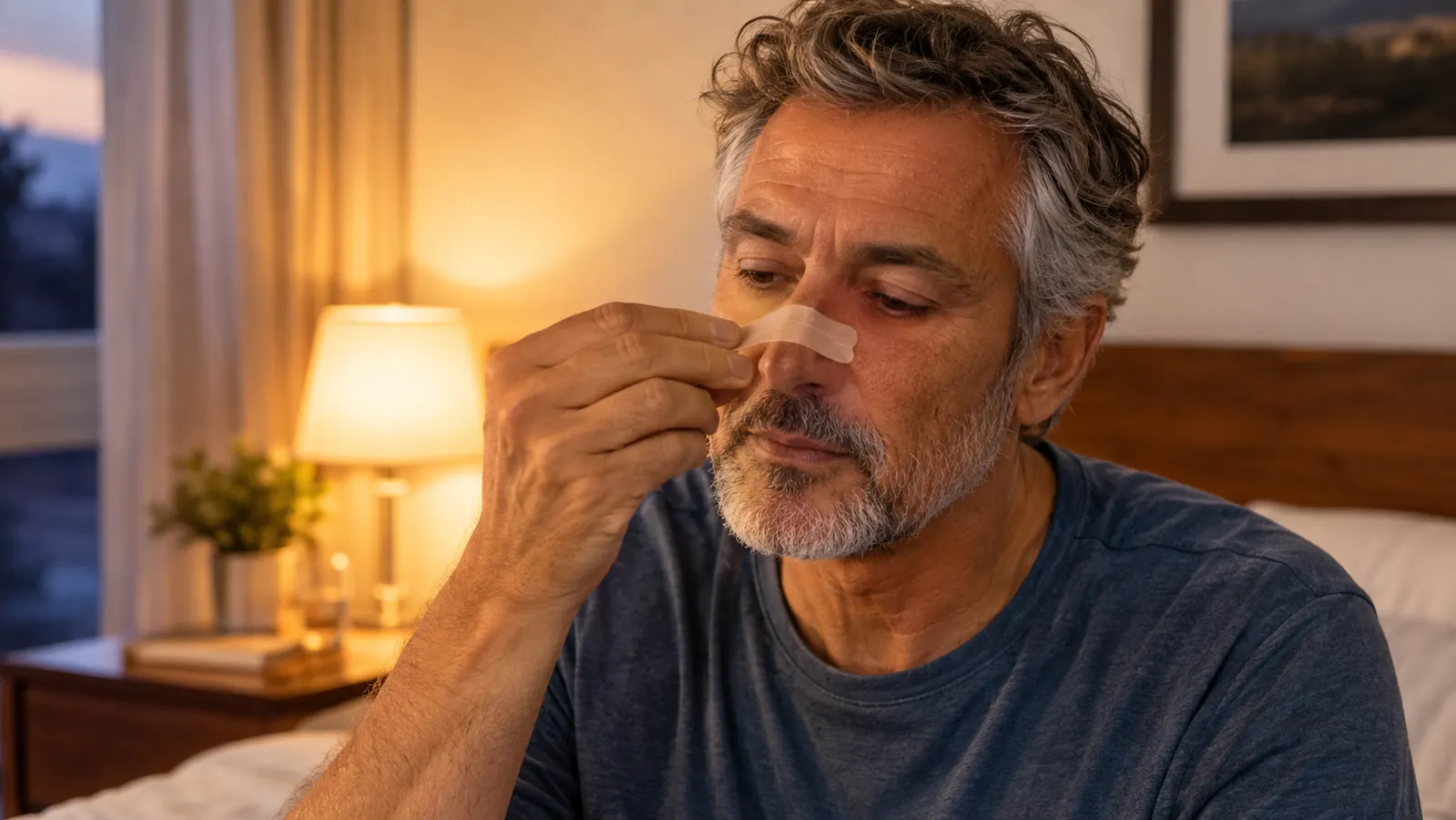
For twenty years I snored loud enough that my wife Darlene finally gave up and moved to the couch most nights. Then she told me she watched me stop breathing in my sleep, and that scared both of us into doing something about it. Two years ago a sleep study confirmed moderate obstructive sleep apnea, and my doctor prescribed a CPAP, which I use every single night. But I still wanted my nose open, especially when I was congested, so about eight months ago I bought a box of Breathe Right Extra Strength strips with my own money and started wearing them nightly. Here is what eight months of that actually looked like.
The Quick Verdict
Breathe Right strips are a solid nightly aid for nasal congestion and mouth breathing, but they are a comfort tool, not a treatment for sleep apnea. They helped me breathe through my nose more often, cut my dry mouth, and made my CPAP feel less suffocating. They did not fix my apnea, and no strip can.
Amazon Check Today's Price →Want a clearer nose tonight?
Breathe Right Extra Strength strips open your nose with spring-like bands that are 50% stronger than the original, and they are hypoallergenic for sensitive skin. I bought my own box and I still reach for one every night.
Amazon Check Today's Price on Amazon →How I've Used It
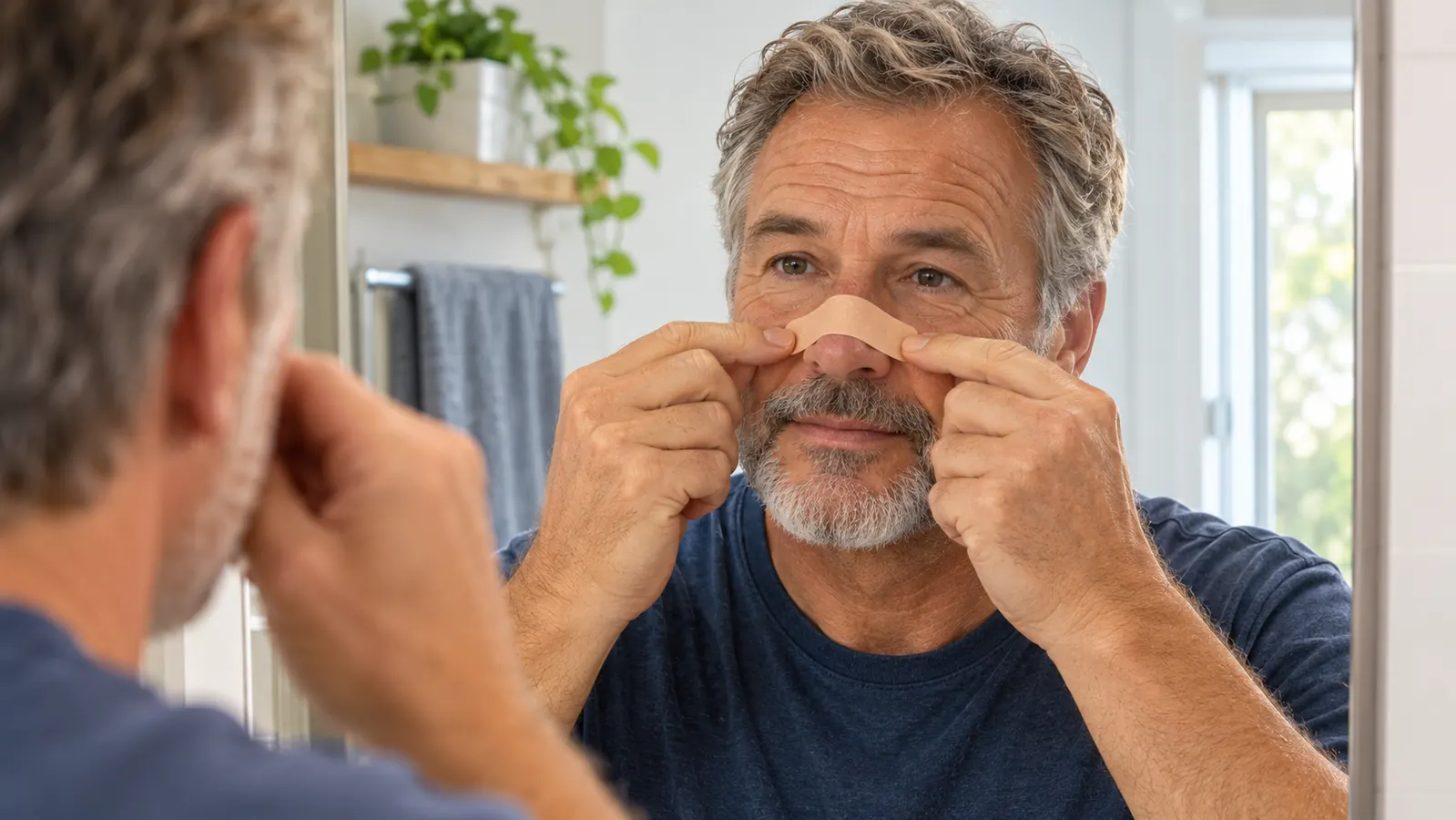
I keep a box on my nightstand and one in the bathroom. The box itself is small, about 1.5 by 4.49 by 6.77 inches and 1.45 ounces, so it disappears into the drawer next to my razor. My routine is simple: wash my face, dry my nose well, peel the liner off, and press the strip across the bridge of my nose. The package says to apply it about an hour before bed so it can set, but I usually put it on right before I lie down and it stays put all night. I sleep on my back unless something keeps me on my side, and I have never had a strip peel off in the middle of the night, not once in eight months. A few notes on fit. The Extra Strength strip is the one with the stronger spring-like bands, and you feel that pull when you put it on. It is not painful, but it is noticeable. My nose is average size and the strip covers the bridge cleanly. Darlene says my voice sounds a little funny for the first few minutes after I put it on, but that goes away.
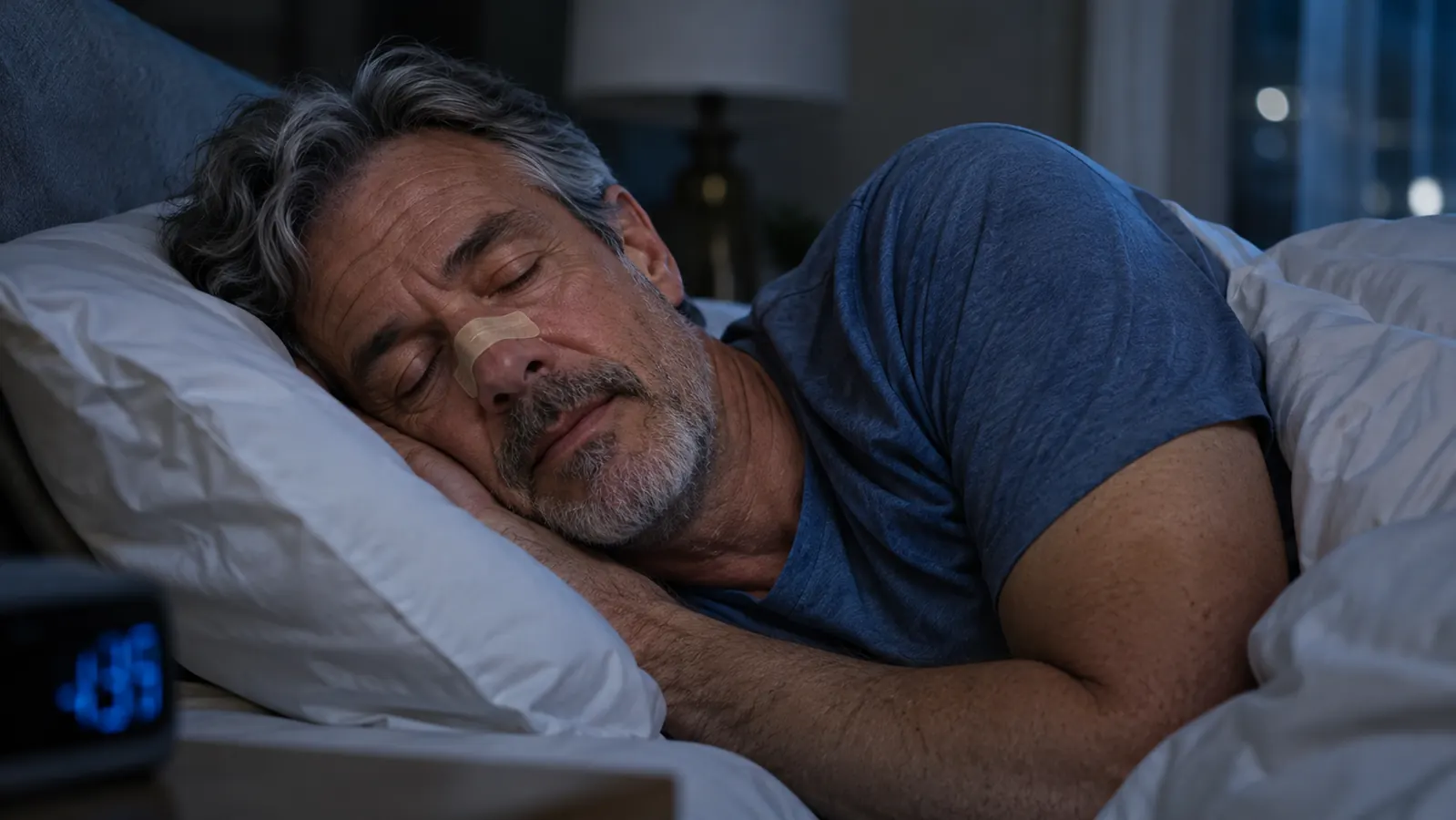
For the first month I wore the strips without my CPAP to see what they would do on their own. They opened my nose, no question, and my snoring got quieter. Darlene noticed it the second night. But my apnea events did not disappear, and I could tell I was still not sleeping as deeply as I do with the machine. So I went back to wearing both: the CPAP for my apnea, and the Breathe Right strip underneath the mask to keep my nose open. That combination has been my nightly setup for about seven months now.
I remember the first night clearly because Darlene wrote the date on the kitchen calendar, the first week of March. I put the strip on at about 9:40, lay down on my back, and for the first time in years I could feel the air moving through my nose without any effort. By 10 o'clock Darlene said the snoring had already changed. It was not gone, but it was quieter and steadier. That first week I kept waiting for the strip to fail, for it to slide off or lose its grip around 3 AM. It never did. The only night it came off was the night I forgot to dry my face properly, and that was my mistake, not the strip's.
What the Strip Actually Does
The idea behind a nasal strip is simple. The flexible band across the bridge of your nose pulls the sides of your nose outward, which opens the nasal passages and lowers the resistance when you breathe in. Breathe Right calls the bands spring-like, and the Extra Strength version uses bands that are 50% stronger than the original. In plain terms: it feels like someone is gently holding your nostrils open from the outside, and that makes inhaling through your nose noticeably easier. I noticed the difference on the very first breath, before I even got into bed.
For me the biggest win was mouth breathing. When my nose is stuffy, I breathe through my mouth, and I wake up with a dry mouth and a sore throat. With the strip on, I breathe through my nose far more often, even when I have a mild cold. That alone was worth the price of the box. I also noticed my CPAP felt less like I was fighting the air pressure, because my nose was not collapsing shut on every inhale. The machine has to push air past whatever is in the way, and when the nasal passages are held open, the air flows in with less fight.
One honest limitation: the strip does nothing for congestion deep in the sinuses. If I have a heavy cold and my whole face is stopped up, the strip still opens the front of my nose, but it cannot drain my sinuses or fix the swelling further back. It is a mechanical aid for the nasal valve, not a decongestant. I learned to pair it with a saline rinse on bad nights, and that combination worked better than either one alone. The rinse clears the back of the nose, the strip holds the front open, and together they get me through a cold without a whole week of mouth breathing.
One thing that surprised me is how much the strip helps when I have allergies. In the spring, when the pollen is heavy outside Knoxville, my nose swells shut by evening. I used to lie in bed and breathe through my mouth all night. With the strip on, the swelling does not matter as much, because the band is doing the work of holding the passage open. It is not a cure for allergies, and I still take my allergy medicine, but the strip takes the edge off the worst part, which is trying to fall asleep when you cannot get air through your nose. The strips are made with 3M materials and they are non-porous, which I think is why they hold up so well against damp skin and humid nights.
Eight Months of Nightly Use: The Long Haul
After eight months I can report three things that surprised me. First, the strips did not lose their stick. I worried that nightly use would irritate my skin or that the adhesive would stop grabbing, but the hypoallergenic material has been gentle, and I have not had a single red mark or rash. I have sensitive skin, so that matters to me. Second, the strips stay on through the night even when I toss and turn. I wake up with the strip still in place almost every morning. Third, I have gone through a lot of boxes. A 44-count box lasts me about six weeks when I wear one every night, so this is a recurring purchase, not a one-time fix. Since March I have bought six boxes, and I just ordered another.
The one thing I would change is the adhesive residue. On humid nights, or if I have any lotion on my face when I apply the strip, it leaves a faint sticky film on the bridge of my nose in the morning. A quick wash fixes it, but it is worth knowing before you buy. I also learned to dry my nose thoroughly before applying, because the strip does not stick as well on damp skin. The worst night was in August, when the humidity here made everything damp. I had put lotion on my face before bed without thinking, and by morning the strip had slid halfway off and left a mess. That was the only night I woke up with the strip not where I put it.
The nights I have skipped the strip are the clearest evidence that it does something. A few times I forgot to put one on, and by morning I knew. My mouth was dry, my throat was sore, and Darlene said the snoring was back to the old volume. One night in particular, after a long day, I fell asleep without putting one on, and Darlene shook me awake around 2 AM because the noise was keeping her up. I stumbled to the bathroom, put a strip on, and the rest of the night was quiet. That is the whole review in one story: the strip does not fix everything, but on the nights it is on, things are measurably better.
How It Compares to What I Tried Before
I have tried a lot of snoring gadgets over the years, and most of them are in a drawer somewhere. Chin straps slid off. Mouthpieces gave me a sore jaw. A wedge pillow helped a little but did not solve the mouth breathing. The Breathe Right strip is the only thing I have kept using past the first month, and I think that is because it does one small thing well instead of promising to fix everything.
Let me be specific about the failures, because that is the part nobody tells you. The chin strap was a band that went over the top of my head and under my jaw to keep my mouth shut. It worked for about two hours, then I would shift in my sleep and it would slide up over my chin. I found it on the pillow every morning. The mouthpiece was worse. It pulled my lower jaw forward and held it there, and after three nights my jaw ached all day. The wedge pillow raised my head and helped my congestion a little, but I still breathed through my mouth, and it took up half the bed. Darlene was not impressed. I also tried a little plastic nasal dilator that sits inside the nostril. It opened my nose fine, but I could feel it all night, and it tickled. The Breathe Right strip is the only one I cannot feel once it is on.
Compared to my CPAP, the strip is obviously not a replacement. My doctor was clear, and I will say it the same way he did: sleep apnea is a medical condition, and only a doctor can diagnose and treat it. No strip, pillow, or mouthpiece replaces a sleep study or a prescribed CPAP. But the strip and the CPAP are not competitors. They do different jobs, and I use them together. The CPAP treats the apnea. The strip keeps my nose open so the CPAP does not have to work as hard. For me, that made the difference between tolerating the machine and wanting to wear it.
What I Liked
- Opens the nose instantly; I felt the difference on my first breath
- Extra Strength bands are 50% stronger than the original, and you can feel the pull
- Hypoallergenic and gentle on sensitive skin; no rash in eight months of nightly use
- Stays on all night, even for a back sleeper who tosses and turns
- Works under a CPAP mask without getting in the way
Where It Falls Short
- Only opens the front of the nose; does nothing for deep sinus congestion
- Leaves a faint sticky film on humid nights or if you have lotion on your face
- Does not treat sleep apnea or snoring caused by the throat or tongue
- A 44-count box lasts about six weeks, so it is a recurring purchase
The strip did not fix my apnea. But it did the one job I asked of it: it kept my nose open at night, and that made my CPAP bearable.
Who This Is For
Buy Breathe Right strips if you snore because your nose collapses when you breathe in, or if you wake up with a dry mouth because you breathe through your mouth at night. They are also a reasonable thing to try if you have mild congestion and want relief that starts working in seconds, not after a pill kicks in. And if you use a CPAP, they are worth a shot for the nights when the mask feels like it is fighting your breathing. The strips are cheap, they are hypoallergenic, and they work immediately, so the downside of trying them is small.
Who Should Skip It
Skip the strips if you have heavy sinus congestion or a cold that has moved deep into your face, because they only open the front of the nose. Skip them if you are hoping they will treat snoring caused by your throat or your tongue, because they will not. And above all, skip them if you or your partner have noticed pauses in your breathing at night. That can be a sign of sleep apnea, and the right move is a doctor and a sleep study, not a strip from the drugstore. I learned that the hard way, and I would rather you not.
My nightly setup, eight months running
A Breathe Right Extra Strength strip on my nose and my prescribed CPAP on top. If you want to try the strip first, it is a small purchase that tells you in one night whether it helps you breathe easier.
Amazon Check Today's Price on Amazon →