
I am Wendell Graves, fifty-nine years old, retired after thirty years as an electric utility lineman, and I live outside Knoxville, Tennessee. For about twenty of those years I snored loud enough that my wife Darlene, a light sleeper if there ever was one, spent most nights on the couch. Then she noticed me stop breathing in my sleep, my doctor sent me for an overnight sleep study, and two years ago I got the news: moderate obstructive sleep apnea, and a CPAP machine I have used every night since. This review is about one thing I added to that setup eight months ago, the Vekkia wedge pillow, and what eight months of sleeping on it has actually been like.
I bought the Vekkia wedge pillow myself, with my own money, the first week of March, and I have slept on it every night since. No free sample, no sponsor, no one sending me a pillow to say nice things about. I am just a guy who has tried a lot of snoring gadgets and CPAP add-ons over the years, kept only a few, and figured you might want to hear from somebody who paid for his own and lived with it for a while. If you are reading this because your partner has started sleeping on the couch, or because a sleep study is sitting on your kitchen counter, I have been where you are. Start with the doctor, not the pillow. But once you have done that, the right pillow can make the treatment easier to live with, and that is exactly what this one did for me.
The Quick Verdict
The Vekkia wedge pillow is the best CPAP and snoring aid I have kept, full stop. It does not cure sleep apnea, nothing does, but it made my CPAP easier to tolerate, cut my morning dry mouth way down, and Darlene has slept in our bed every single night since March.
Amazon Check Today's Price →The wedge pillow that finally got my wife back in our bed
Eight months of nightly use, a removable washable cover, side pockets for my CPAP gear, and a slope that actually held up. If you snore or use a CPAP, this is the first thing I would try.
Amazon Check Today's Price on Amazon →How I've Used It
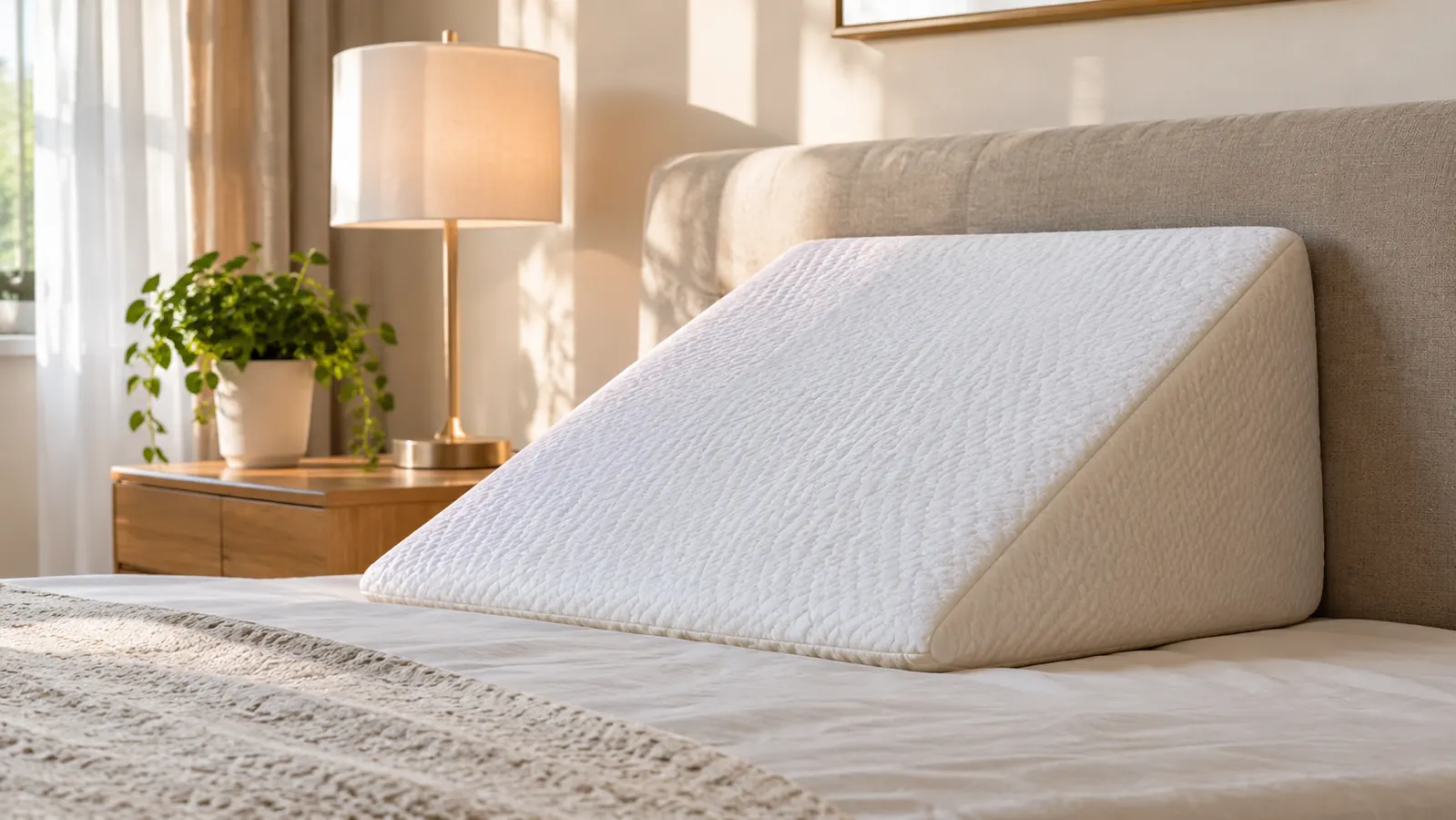
The Vekkia wedge is 32 inches long, 22 inches wide, and 7.5 inches high, with a 100% polyester cover. I put it at the head of our queen bed, on top of my regular pillow, and I sleep on my back with my head and shoulders propped up. That is the position my CPAP works best in, and it is also the position that keeps my airway from collapsing the way it does when I lie flat.
One thing the listing tells you up front: give the foam 48 hours to puff up and firm up after you unpack it. That is not a gimmick. The first night I tried it, the pillow was noticeably softer than it is now. After two days it had firmed up, and it has held that shape for eight months. I have not flipped it, fluffed it, or done anything to it except wash the cover.
I use the side pockets every single night. My CPAP mask goes in one, my phone in the other, and the hose runs up beside me without tangling. It is a small thing, but when you wake up at 2 a.m. and need to adjust your mask, not having to fumble around in the dark is a real quality-of-life win.
The first night was a mess, and I want to be honest about that. I unpacked the pillow, put it on the bed, and lay down, and it felt like I was sleeping on a ramp. My hips slid, my neck sat at a weird angle, and I got up twice to rearrange everything. I almost boxed it up that night. I am glad I did not, because by the third night the foam had done what the listing said it would do, and the angle stopped feeling like a ramp and started feeling like a lazy chair. Darlene came back to the bed on a Tuesday night in the middle of March, and she has not left since. That is the whole review in one sentence, but I will keep going anyway.
I also learned that where the wedge sits on the bed matters more than I expected. I started with it pushed tight against the headboard, and my head ended up too far up the slope. I moved it down about four inches, so the bottom edge sits just above the middle of my back, and that is the sweet spot. Darlene calls it the launch pad, because the slope is so consistent. Once I found that position, I stopped thinking about the pillow entirely, which is the highest compliment I can pay any sleep product.

What the Vekkia Wedge Actually Does for Snoring and Sleep Apnea
Let me be plain about this, because I do not want anybody spending money on a pillow thinking it will fix sleep apnea. Sleep apnea is a medical condition. Only a doctor can diagnose it, and only a doctor can tell you how to treat it. For me, the treatment is a CPAP my doctor prescribed, and I use it every night. No pillow replaces that. If you suspect you have sleep apnea, if your partner notices you stop breathing, get the sleep study. That is the first step, and no wedge pillow is a shortcut around it.
What a wedge pillow can do is make the treatment easier to live with. When I lie flat on my back, my CPAP pressure has to work harder to keep my airway open, and I wake up with a dry mouth and a puffed-out feeling. Propped up at 7.5 inches, my airway stays more open on its own, the CPAP does less of the work, and my mouth is not nearly as dry in the morning. Darlene says my snoring on the nights I use both the CPAP and the wedge is basically gone.
The other thing it helped with was acid reflux at night. I did not expect that, and I did not buy it for that, but sleeping at an incline made a difference. I am not a doctor and I am not going to give medical advice, I am just telling you what I noticed over eight months.
Let me give you a concrete night from my notebook. I keep a little log on my nightstand, the same habit I picked up during the sleep study. On the first of April, I wrote: mask on at 10:40, woke once at 2:15 to adjust the strap, dry mouth mild instead of the usual sandpaper, Darlene still in bed at 6:30. That is a typical night now. Before the wedge, a typical night was three or four wake-ups, a mouth so dry I kept a glass of water on the nightstand, and Darlene gone to the couch by midnight. My doctor reads the data card from my CPAP at every visit, and my leak numbers and my AHI are both better than they were when I slept flat. The pillow did not do that alone. The CPAP does the heavy lifting. But the wedge keeps my body in a position where the machine can actually do its job.
What I Liked
- 32 inches long covers my whole upper back and shoulders, not just my head
- Removable, washable cover with a soft velvet side panel that has held up to eight months of washing
- Side pockets keep my CPAP mask and phone within reach at 2 a.m.
- The 7.5 inch slope has not flattened or sagged in eight months
- Made my CPAP seal more stable and cut my morning dry mouth way down
Where It Falls Short
- Slides on smooth sheets unless you tuck the bottom edge under a pillow
- Built for back sleepers; side sleepers will fight it all night
- Takes a full 48 hours to puff up and firm up after you unpack it
- It is a sleep aid, not a treatment; it will not fix sleep apnea on its own
The night I stopped sleeping flat was the night I stopped waking up with a mouth like a desert. My CPAP still does the heavy lifting, but the Vekkia wedge made it tolerable.
The Long-Term Test: Eight Months of Nights
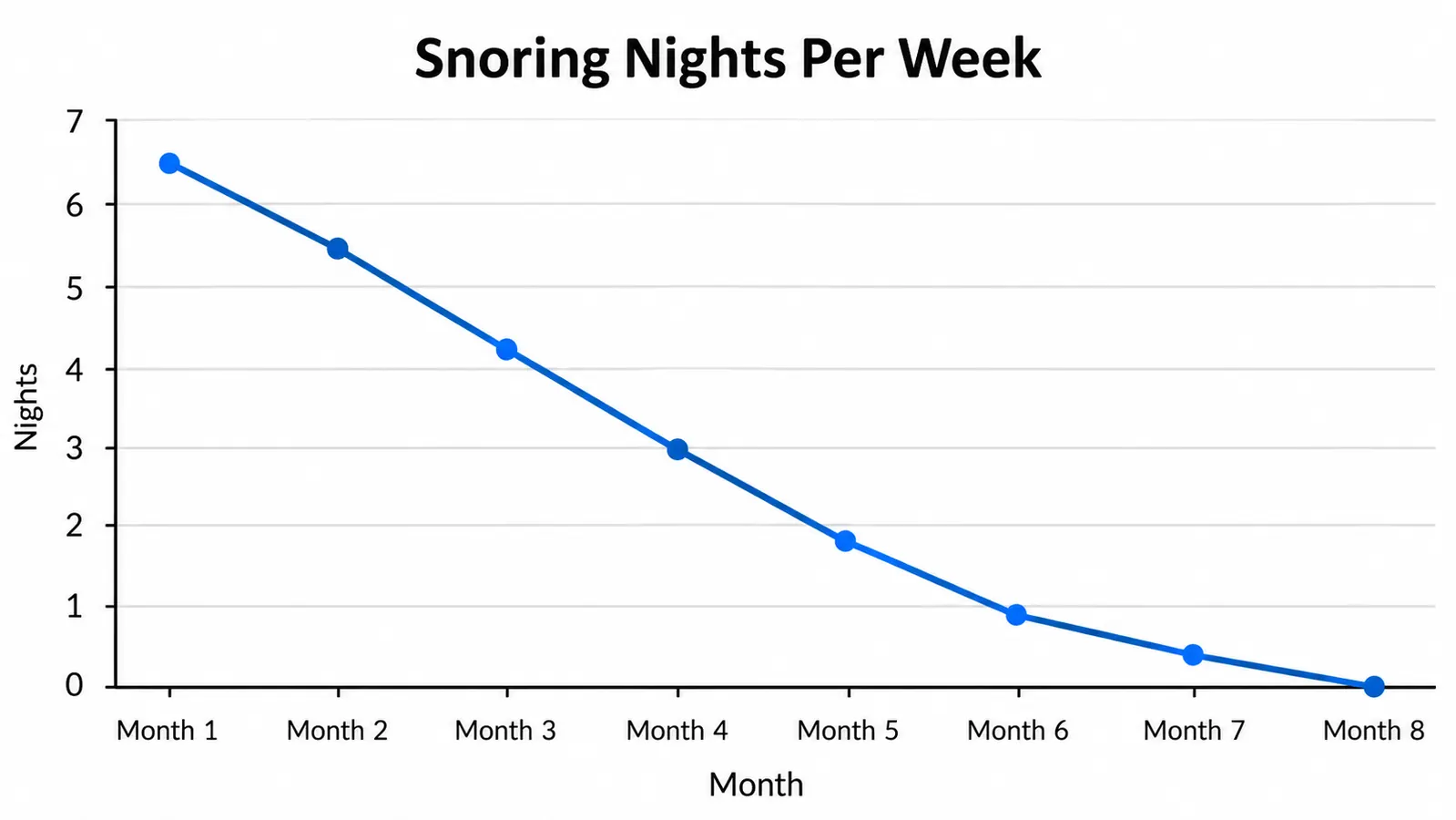
The first thing people ask me about any pillow is whether it goes flat. Eight months in, this one has not. The foam is still firm, the 7.5 inch height is still 7.5 inches, and there is no sagging in the middle where my head rests. I weigh about 210 pounds, so I am not a delicate sleeper, and this thing has taken everything I have thrown at it.
The cover has held up too. It is removable, which is the feature I care about most on anything that touches my face all night. I have washed it every couple of weeks in cold water and hung it to dry. No pilling, no fraying, no weird shrinkage. The soft velvet side panel that sits against my neck is still soft. For a guy who sweats more than he would like to admit, that matters.
The one honest complaint I have: the wedge slides a little on smooth sheets. It is not a dealbreaker, I just tuck the bottom edge under my regular pillow and it stays put, but if you are a restless sleeper you should know it is a thing. Also, if you sleep on your side, this is not really the pillow for you. It is built for back sleepers. I am a back sleeper, so it works, but I want to be straight about that.
One thing I did not expect: the pillow has become part of my routine in a way I cannot fully explain. We took a long weekend trip in June, and I did not bring the wedge. I slept flat for three nights, and by the second morning I was back to the old dry mouth, and Darlene said my snoring was breaking through the CPAP again. We both agreed the drive home could not come fast enough. That little experiment told me more than any spec sheet. The Vekkia is not a luxury add-on anymore. It is part of how I sleep, right up there with the mask and the hose. If I ever replace it, it will be because the foam finally gives out, and after eight months there is no sign of that happening.
How It Compares to the Other Things I Tried
Before the Vekkia, I tried the classic stack of pillows. You know the setup: two or three pillows propped against the headboard, which collapses by 3 a.m. and leaves you flat on your back with a crick in your neck. I tried a cervical pillow, which helped my neck but did nothing for my airway. I tried a chin strap, which I hated and stopped using after a week. I tried nasal strips, which helped when my nose was stuffy but did nothing for my mouth breathing.
The Vekkia wedge is the only one of those that I am still using eight months later. The difference is the slope. A stack of pillows gives you a lumpy, unstable incline. The wedge gives you a solid, consistent 7.5 inch rise from your lower back to your head. Your body stays in one position all night, which means your CPAP mask stays sealed, which means the machine works the way it is supposed to.
The clearest comparison came by accident. One night in May, I came home late from a dinner with some retired linemen, and I was too tired to set the wedge up properly. I shoved it aside and slept flat on my regular pillows. I woke up at 3 a.m. with the mask blown off my face, which almost never happens when I use the wedge, and I spent the rest of the night fighting the machine. The next night I set the wedge up right and slept through until the alarm. That is the whole difference in a nutshell. The wedge keeps my body in the position the CPAP needs, and without it, the machine and I are fighting each other.
Who This Is For
Buy the Vekkia wedge pillow if you are a back sleeper who uses a CPAP and wants the machine to work better. Buy it if you snore and your partner has moved to the couch. Buy it if you wake up with a dry mouth, or if you want to sleep at an incline for reasons your doctor has signed off on. It is also a great buy if you read in bed, because sitting up against this thing is genuinely comfortable for an hour of reading before lights out.
Who Should Skip It
Skip it if you are a side sleeper, because the wedge is built for back sleeping and side sleepers will fight it all night. Skip it if you expect a pillow to fix sleep apnea, because it will not, and if you have not had a sleep study, that is where you need to start. And skip it if you want something that never moves on the bed, because on smooth sheets the wedge can slide unless you anchor the bottom edge.
Eight months later, I would buy the Vekkia wedge again tomorrow
It made my CPAP easier to live with, got my wife back in our bed, and has not gone flat. If that sounds like your nights, check the current price on Amazon.
Amazon Check Today's Price on Amazon →