

Darlene moved to the couch the winter before last. I don't blame her. Twenty years of my snoring had worn her down, and the night she noticed me stop breathing in my sleep, she made the call. The sleep study came back moderate obstructive sleep apnea, and my doctor prescribed a CPAP. I've used it every night since. It changed my life. But it did not fix everything, and the thing it did not fix was the stuffy nose that left me mouth-breathing into that mask until my throat felt like gravel.
I tried the usual gadgets first. Nasal strips, a chin strap, a different pillow, a wedge. Some helped a little, most ended up in the drawer. Then my doctor mentioned saline irrigation, nothing fancy, just a way to clear the nasal passages before bed. I picked up a NeilMed Sinus Rinse kit that first week of March and I've used it almost every night since. Eight months in, it's one of the few things I kept.

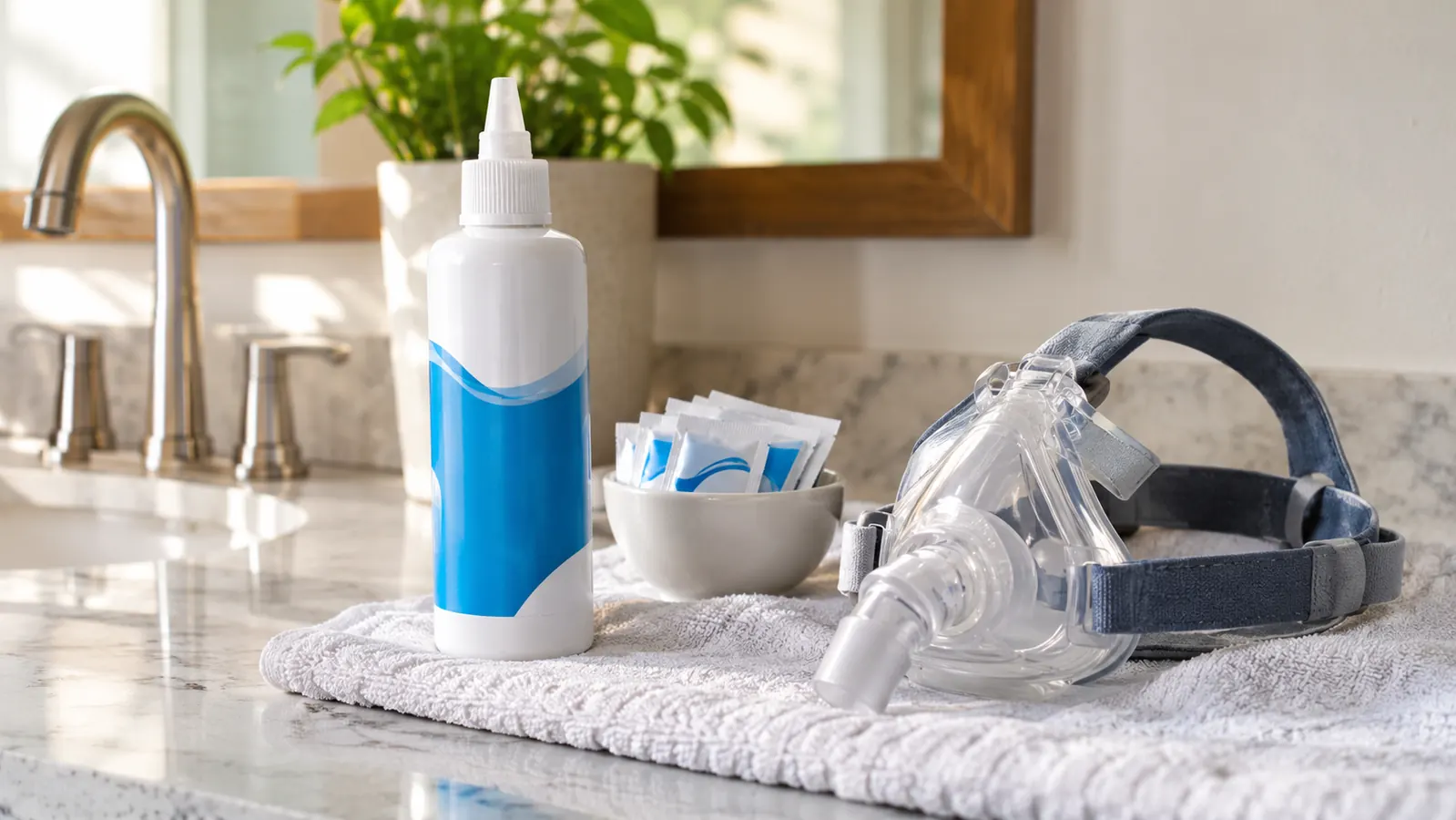
The kit comes with the squeeze bottle and fifty pre-measured packets. At one rinse a night, that's nearly two months before I need to restock. The bottle is small enough to live on the bathroom counter next to my CPAP mask, and the whole routine takes a couple of minutes from start to finish.
I'll be honest about the parts that aren't glamorous. The first few times, the sensation of water going through your nose is strange, and if you don't lean forward just right, you'll make a mess. I keep a hand towel on the edge of the sink. Once you get the angle, it's a two-minute job, and the clean feeling afterward is worth the awkward first week.
The night I rinsed before bed and then slept through the night with my mouth shut, I knew the NeilMed kit had earned its spot on the counter.
Stuffy Nights Are the Hardest Part of CPAP
If you wake up with a dry mouth and a foggy head, a two-minute saline rinse before bed might be the missing step. Check today's price on Amazon.
Amazon Check Today's Price on Amazon →The kit is simple. A squeeze bottle, pre-measured saline packets, and a few minutes at the sink. You mix the saline with lukewarm water, lean over the basin, and let the rinse go in one nostril and come out the other. It sounds worse than it is. The first time I did it, I stood there coughing and sputtering. By the third night I had the rhythm down, and by the end of the first week it was as routine as brushing my teeth.
What surprised me was how much it helped with the CPAP. When my nose is clear, I breathe through it instead of my mouth, the mask seals better, and I don't wake up with that cracked dry throat. Darlene noticed before I did. She said the machine sounded quieter, which is her way of saying I stopped fighting it at 2 a.m. The NeilMed rinse is preservative free, iodine free, and latex free, which mattered to me because my skin reacts to everything.
It also helped with the congestion I blamed on Tennessee summers. The product label lists nasal allergies, dryness, post nasal drip, congestion, and irritation from dust, pollen, smoke, and the rest. I can't diagnose myself, but I know this: on the nights I rinse, I sleep. On the nights I skip it, I'm more likely to wake up stuffy and reach for the tissues before I reach for the mask.
Is it a cure? No. It is a rinse, not a medicine. It does not treat sleep apnea, and nothing I bought replaces the CPAP my doctor prescribed. But it took the edge off the thing that made the CPAP hard to tolerate, and that made every other part of the routine easier.
The mornings are the part I didn't expect to improve. I used to wake up with a dry mouth and a headache, especially in the summer when the pollen was thick. On the nights I rinse, I wake up with my nose clear and my mouth shut, and the first sip of coffee doesn't hurt. That may sound like a small thing, but after twenty years of waking up feeling like I'd been mouth-breathing all night, it's a big thing.
What I'd Tell You If We Were Sitting at My Kitchen Table
I'd tell you to talk to your doctor first. Snoring can be a sign of sleep apnea, and sleep apnea is a medical condition only a doctor can diagnose and treat. No squeeze bottle, strip, or strap replaces a sleep study or a prescribed CPAP. If you're already on a machine and struggling with a stuffy nose, ask your doctor whether saline irrigation is worth trying. That is exactly what I did, and it worked for me.
I'd tell you to give it a week before you judge it. The first rinse feels strange. By night three it's routine. By week two you'll know whether it's helping. I'd also tell you to keep it simple: lukewarm water, the pre-measured packet, the squeeze bottle. No need to make it complicated.
And I'd tell you the honest trade-off. It adds a couple of minutes to your bedtime routine, and you have to keep the bottle clean. Some nights you'll be tired and tempted to skip it. I still skip it sometimes, and I notice the difference the next morning. In exchange for a few minutes at the sink, I sleep better, Darlene sleeps better, and we're both in the same bed again. That is worth more to me than any gadget I've tried.
Two Minutes at the Sink, a Full Night's Sleep
The NeilMed Sinus Rinse kit is the one bedtime addition I kept after eight months. If stuffy nights are ruining your sleep, see today's price on Amazon.
Amazon Check Today's Price on Amazon →