
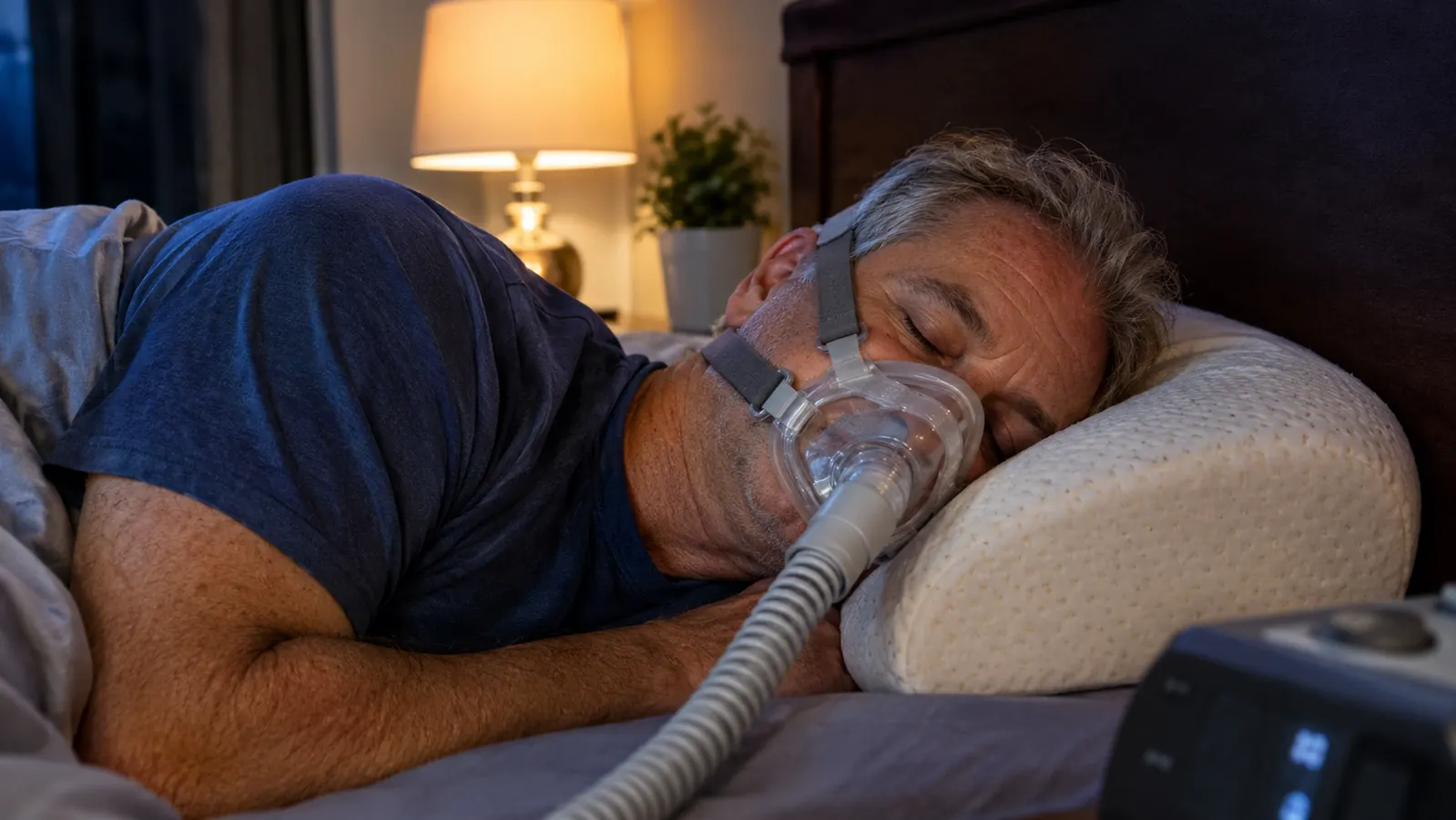
For twenty years I snored loud enough that my wife Darlene finally moved to the couch most nights. When she noticed me stop breathing in my sleep, she made the call that probably saved me a lot of trouble: she sent me to the doctor. Sleep study, diagnosis of moderate obstructive sleep apnea, and a CPAP machine that I have used every night for two years now. I sleep on my back unless something keeps me on my side, and the first few weeks with that mask were rough. The worst part was trying to sleep on my side. The mask pushed against the pillow, air hissed out around the cushion, and I woke up with a stiff neck and a dry mouth. I tried regular pillows, I tried folding a standard pillow in half, I tried sleeping flat on my back, and none of it worked. Then I bought the Lunderg CPAP Pillow for Side & Back Sleepers, and side sleeping finally started to work for me.
Before I get into the steps, the honest part: snoring can be a sign of sleep apnea, and sleep apnea is a medical condition only a doctor can diagnose and treat. No pillow, strap, or strip replaces a sleep study or a prescribed CPAP. If you are here because your partner is scared, do what I did and go get the test. This guide is for people who already have their machine and just want to sleep on their side without fighting the mask all night.
Side sleeping starts with a pillow that clears the mask
The Lunderg CPAP Pillow for Side & Back Sleepers is the one I kept after trying regular pillows, folded pillows, and no pillow at all. It is adjustable, so you can tune the height to your mask and your shoulder width.
Amazon Check Today's Price on Amazon →Step 1: Set your bed up so you are not fighting the pillow
When I started, I made the mistake of using the same pillow I had used for years. A regular pillow is too thick for side sleeping with a mask. It tilted my head up, bent my neck, and shoved the mask into my cheek. The seal broke almost every time I moved. The fix was not complicated: I needed a pillow with a cutout or a lower profile in the middle, so the mask had somewhere to sit.
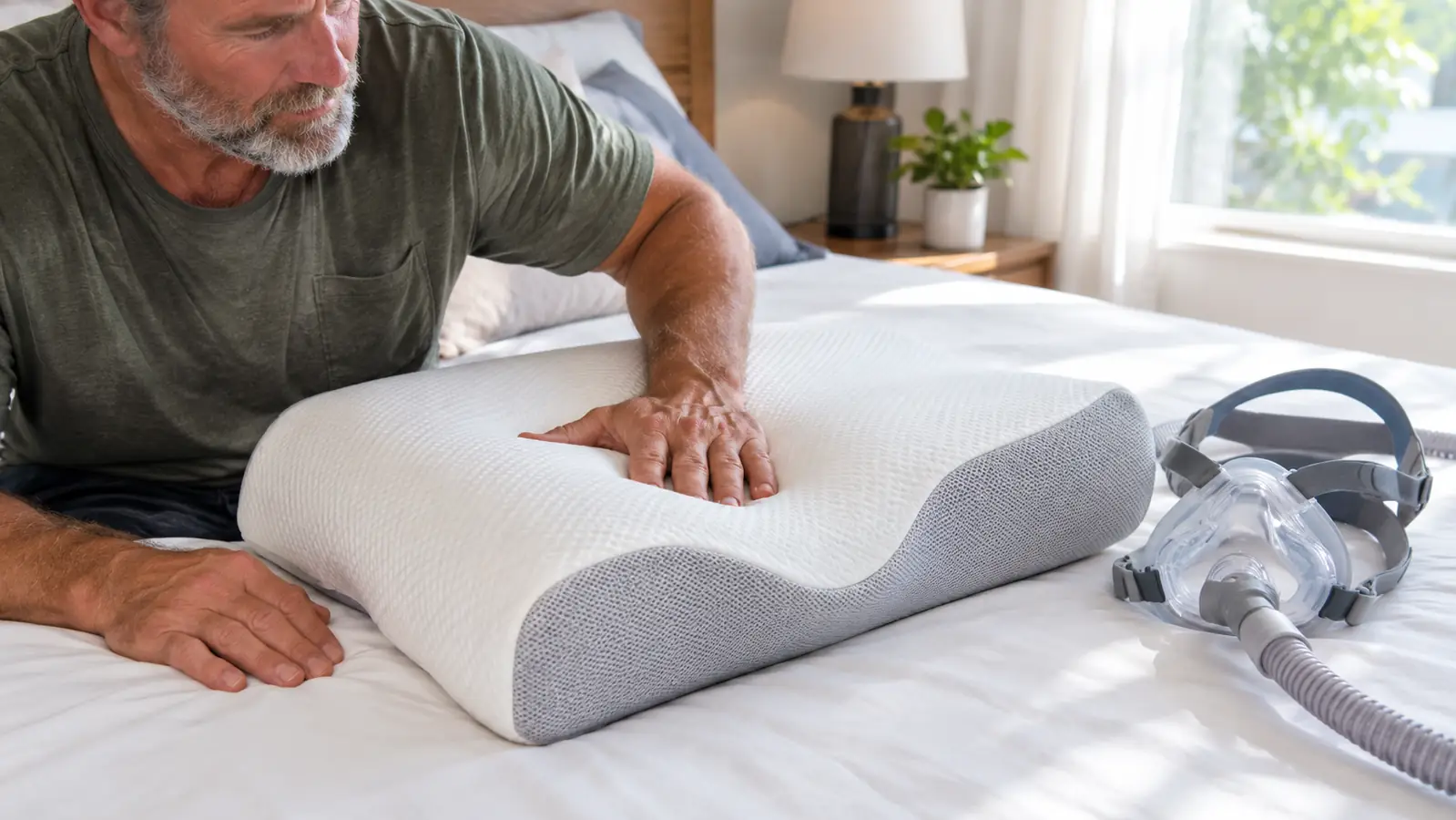
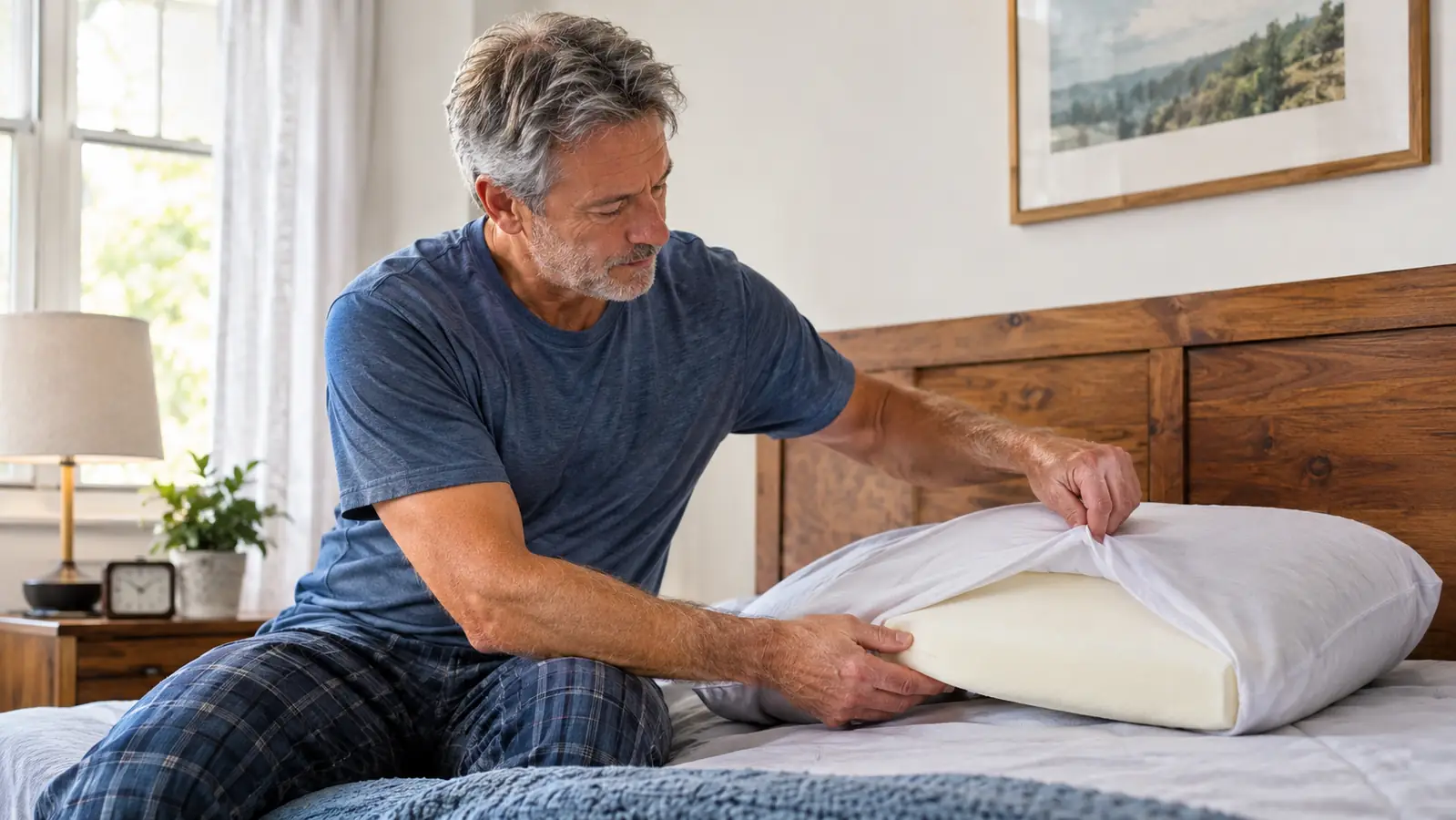
The Lunderg pillow is a contoured memory foam pillow with an adjustable thickness. It is made with CertiPUR-US certified high-density memory foam, which means the foam itself is tested and certified, and it comes with a removable 1.1-inch memory foam layer so you can change the height. That matters more than you would think. My shoulders are broad from thirty years of climbing poles, so I keep the layer in. My wife tried it once and took the layer out. Same pillow, two different heights, both of us comfortable.
Set the pillow up before you get in bed. Unzip the cover, add or remove the 1.1-inch layer, and zip it back up. Then lie on your side and check one thing: your nose should line up roughly with the center of your chest, not pointing up or down. If your head is tilted up, take the layer out. If your neck feels bent down, put it back in. It takes two minutes and it is worth doing before the lights go off. The first night I left the layer in and woke up with my chin tucked toward my chest. The second night I took it out and my head tilted up too far. On the third night I put the layer back in and scooted down the pillow about an inch, and that was the one. Darlene watched me do this and said I looked like I was tuning a guitar. She was not wrong. A pillow is the kind of thing you do not realize you have been fighting until you stop fighting it.
Step 2: Put the mask on like you mean it
Most mask leaks are not a pillow problem, they are a mask problem. I used to slap the mask on, roll over, and wonder why air was hissing out. Then I started putting it on while sitting up, before I even touched the pillow. That one change cut my leaks more than anything else I tried.
Put the mask on, turn the machine on, and lie on your back for a minute. Move your head side to side, talk a little, fake a cough. If the seal holds through that, it will probably hold when you roll over. If it does not, adjust the straps. A mask that is too loose leaks. A mask that is too tight leaks too, and it leaves red marks on your face. The right tightness is the one where the cushion sits evenly and you do not feel air moving past your skin. The first time I did this, the seal blew out the moment I turned my head to the left. I tightened the bottom strap a quarter of an inch and tried again. It held. That quarter of an inch was the difference between a night of hissing air and a night of quiet, and it took me about two minutes to find it. I tell people that story because most mask problems are not mask problems at all. They are half-inch problems.
Here is the part nobody told me: the pillow has to work with the mask, not against it. The Lunderg pillow has a contoured shape that gives the mask room, so the cushion does not get shoved into your cheek when you roll onto your side. With a regular pillow, the mask pressed into the foam and the seal lifted. With the cutout, the mask sits in the open space and the seal stays put. That is the whole difference, and it is a big one.
Step 3: Learn the side-sleep position that actually works
There is a right way and a wrong way to sleep on your side with a CPAP. The wrong way is what most of us do naturally: roll over, drop your head onto the pillow, and pull your top shoulder forward. That bends your neck, twists your airway, and pushes the mask into the pillow.
The way that worked for me is simple. Lie on your side with your bottom arm out in front of you, slightly bent, like you are reaching for the edge of the bed. Your head should rest on the pillow with your ear in the contoured dip. Your bottom shoulder sits just off the pillow, not under it. That keeps your spine in a straight line from your neck to your hips. It took me about a week to stop sliding back onto my back, but once my body got used to the position, it stuck. The first two nights I woke up on my back with the rolled blanket on the floor. The third night I made it to four in the morning. By the end of the week I was waking up on my side with the mask still sealed. Darlene said she could tell the difference because I stopped thrashing around.
If you are a back sleeper like I was, put a body pillow or a rolled-up blanket behind you. It sounds silly, but it blocks you from rolling over in the night. I used a rolled blanket for the first month. After that, I did not need it anymore. The combination of the contoured pillow and the position kept me on my side without me thinking about it.
Step 4: Fix the small things that wake you up
The big leak problems get solved in steps one through three. The small problems are what actually woke me up. The biggest one was a dry mouth. I breathe through my mouth when my nose is stuffy, and on bad nights I woke up with my mouth feeling like sandpaper. My doctor suggested a heated humidifier on the machine, and that helped a lot. I also keep a bottle of water on the nightstand. It is not glamorous, but it works.
The second small thing was the pillowcase. The Lunderg pillow comes with two pillowcases included, and they are machine washable. That is not a throwaway feature. CPAP air blows all night, and a pillowcase picks up oil, drool, and dust. I wash the case every week and swap in the second one. It takes two minutes, and the pillow itself stays clean a lot longer.
The third thing is the cover. The Lunderg pillow has a removable cover, and the care instructions say machine wash. I take the cover off and wash it on gentle with the cases. The memory foam itself I never put in the washer. Foam that gets soaked takes days to dry and starts to break down. Spot clean the foam if you need to, and wash the cover and cases instead.
Step 5: Give it a real chance before you quit
The first night with the Lunderg pillow, I slept okay. The second night was better. By the end of the first week, I stopped thinking about the pillow entirely, which is exactly what you want from a pillow. The leak report on my machine told the same story: a small leak around four in the morning on night one, nothing at all on night two. That second morning was the first one in weeks I woke up without a stiff neck, and I have been sleeping on my side ever since. If you try this and still wake up with leaks, give it a few more nights before you change anything. Your body has to unlearn the way it has been sleeping for years.
One honest note: this pillow is not for everyone. It is a medium-firm memory foam pillow, and memory foam has a slow-rebound feel that some people love and some people hate. If you like a soft, squishy pillow, this is not that. It is also adjustable, which means you have to do a little setup work. If you are not willing to fiddle with the 1.1-inch layer, a fixed pillow might be simpler. For me, the adjustability is exactly why it worked. I needed a pillow that could match my shoulders and my mask, and this one could.
And if side sleeping just will not happen for you, talk to your doctor. Some people do better with a different mask, a chin strap, or a different machine setting. The pillow is a tool, not a cure. The cure is the CPAP, and the pillow just makes the CPAP easier to live with.
What Else Helps
A few things made the Lunderg pillow work better. First, I raise the head of my adjustable bed just a little, which keeps my airway more open and makes the mask seal easier. Second, I use the ramp setting on my machine, so the pressure starts low and builds up after I fall asleep. Third, I keep the bedroom cool. The Lunderg pillow is advertised with cooling as a special feature, and the cover does not trap heat the way my old pillow did. Fourth, I wash the case weekly, because a clean case keeps the foam from holding smells. None of these are as important as the pillow and the mask fitting right, but together they made the difference between okay sleep and good sleep.
The mask sat in the cutout instead of pressing into the foam, and the seal held all night. That was the first morning in weeks I did not wake up with a stiff neck.
If you side sleep with a CPAP, this is the pillow to try first
The Lunderg CPAP Pillow for Side & Back Sleepers is adjustable, comes with two machine-washable pillowcases, and is made with CertiPUR-US certified high-density memory foam. It worked for a 59-year-old lineman with a queen bed and a stubborn back-sleeping habit. It might work for you.
Amazon Check Today's Price on Amazon →