
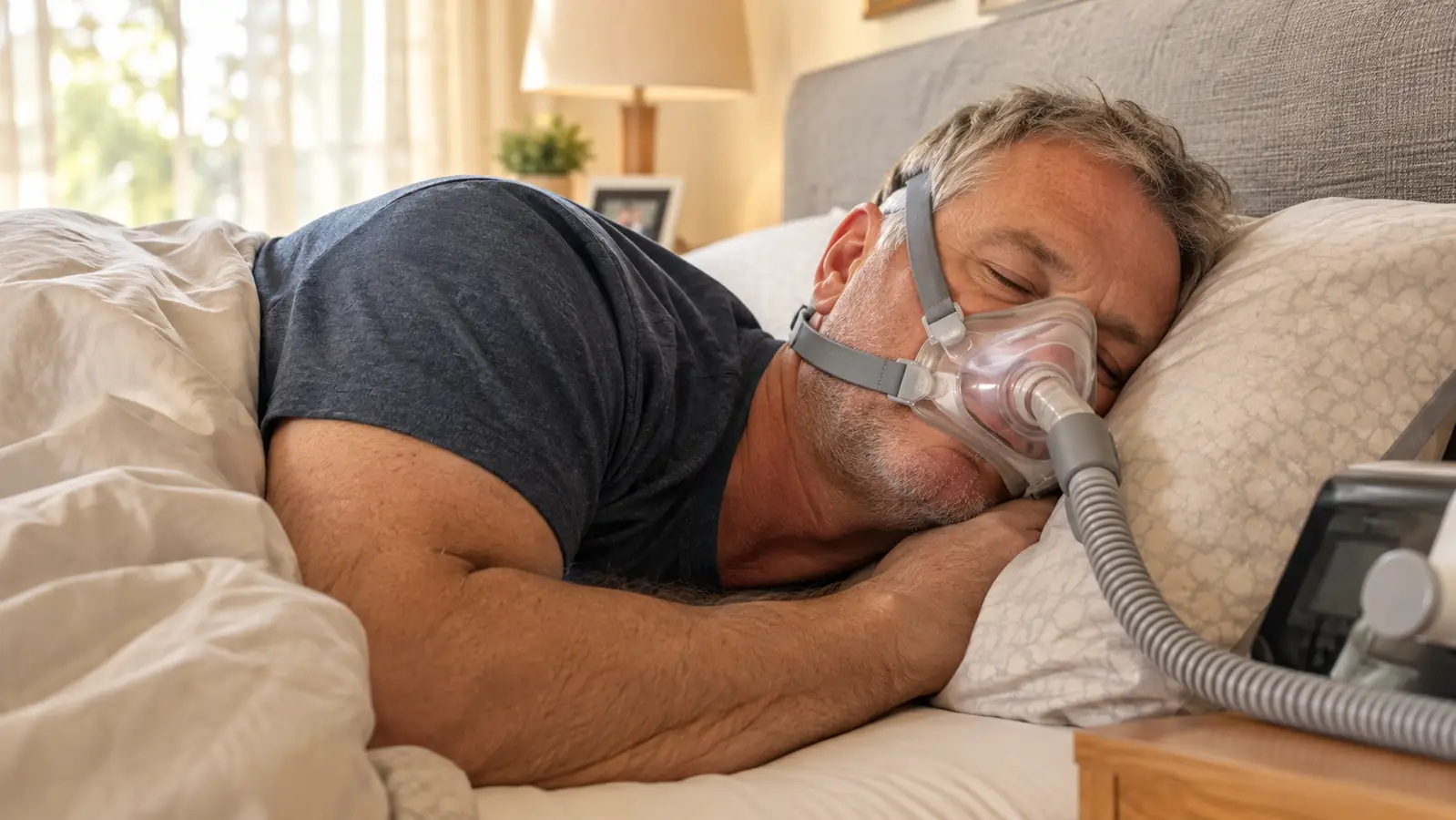
The first six months on CPAP, I woke up most mornings with the mask shoved halfway up my cheek and a knot in my neck that took an hour to loosen. My old pillow seemed fine for sleeping. It was not fine for sleeping with a mask strapped to my face. I tried folding it, stacking two pillows, flipping the flat one under the mattress. Nothing kept the seal through the night.
I bought the Lunderg CPAP pillow in the first week of March, with my own money, after my wife Darlene told me to stop complaining and do something about it. Eight months later it is still on my bed, and the mask stays where I put it. That sounds like a small thing. If you have ever woken up at 3 a.m. with air hissing past your cheek, you know it is not.
The Quick Verdict
The best CPAP add-on I have kept. It will not treat your apnea, only a doctor and a machine can do that, but it fixed the leaks and the neck pain that made me want to quit the machine in month two.
Amazon Check Today's Price →If your mask leaks no matter how tight you pull the straps, this is the review to read.
Eight months of nightly use, one honest list of what the Lunderg pillow does, what it does not do, and who should skip it entirely.
Amazon Check Today's Price on Amazon →How I've Used It
I have used this pillow every night since the first week of March, about eight months now. It sits on my side of the queen bed I share with Darlene. It weighs 5.1 pounds, which sounds heavy for a pillow, but that weight is why it does not slide around when I turn. The fill is high-density memory foam, CertiPUR-US certified, the slow-rebound kind that takes a few seconds to spring back after you lift your head.
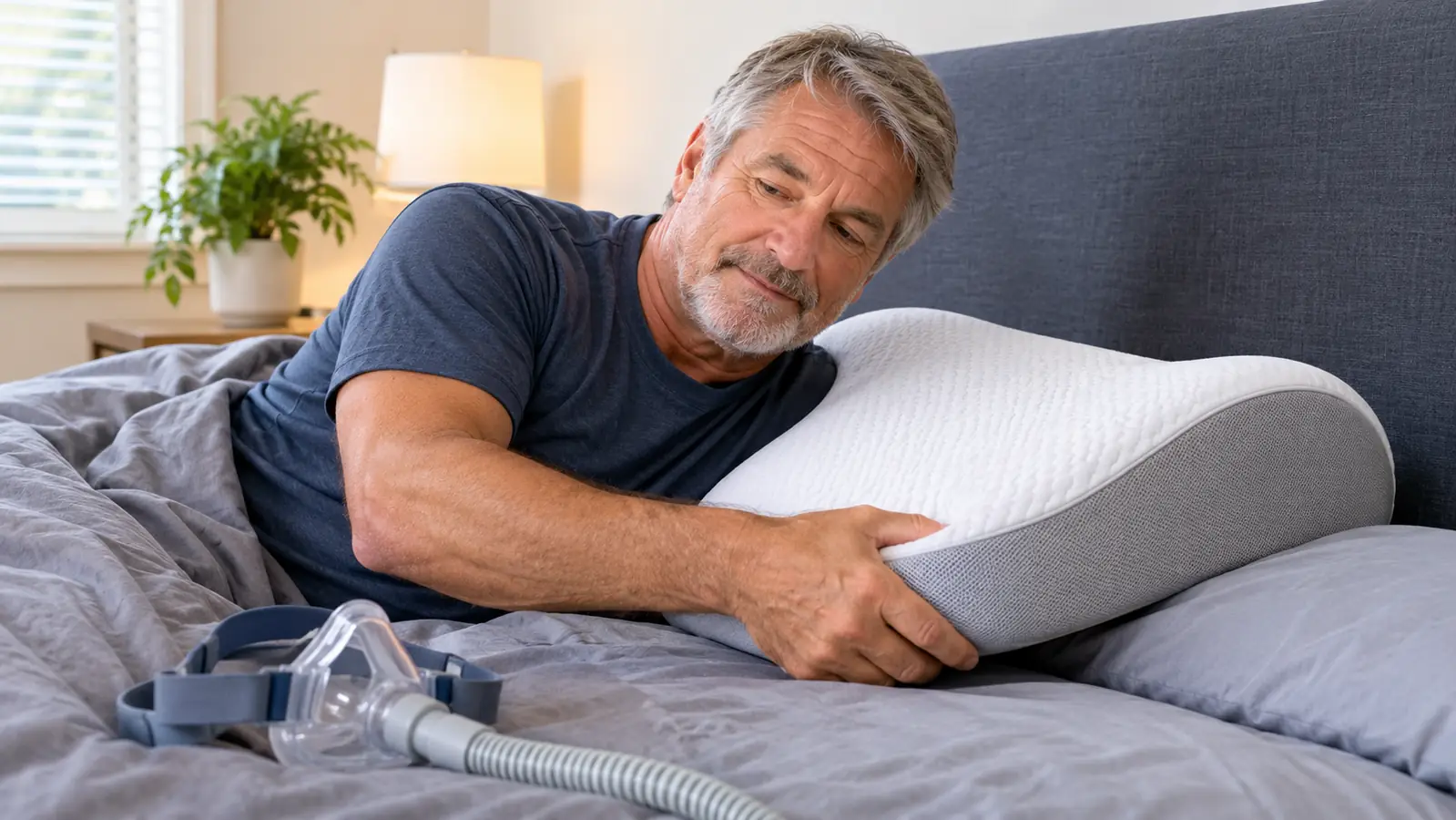
The Lunderg pillow has an adjustable thickness. There is a removable 1.1 inch memory foam layer inside, and you take it out or leave it in depending on how you sleep. I started with the layer in, because I mostly sleep on my back. After two weeks I pulled it out for the nights I roll onto my side. That ten second change made more difference to my mask seal than any strap adjustment I ever made.
Two pillowcases come in the box, both machine washable. I swap them every Sunday with the regular sheets. The cover is described as cooling, and on the warm nights we get in Tennessee it does feel noticeably less stuffy than a standard cotton case, though I would not call it cold. It is a comfort improvement, not a cure for a Tennessee summer.
I should say how I sleep, because it matters. I am a back sleeper by habit, but I roll onto my side a few times a night. I breathe through my mouth when my nose is stuffy, and I wake with a dry mouth on bad nights. The pillow did not change any of that. It changed the seal, and the seal is what kept me on the machine.
What the Adjustable Height Actually Does
Here is the problem nobody tells you when you start CPAP. The height of your pillow changes the angle of your head, and the angle of your head changes where the mask sits on your face. Too high and the mask tips and leaks at the bottom. Too low and the top of the mask digs into the bridge of your nose. My old pillow was one fixed height. I could not change it, so I could not fix the leak.
The Lunderg pillow solved that with the removable 1.1 inch layer. Leave it in and the pillow is taller, better for back sleeping. Take it out and it is lower, better for side sleeping. I keep the layer on the nightstand and swap it depending on how my neck feels at bedtime. It takes about twenty seconds, and it beats buying a second pillow.
The slow-rebound foam matters here too. A firm, fast foam pushes back against the mask frame all night. This foam gives way slowly, so the mask frame settles into the foam instead of being shoved. I am not going to pretend I understand the physics. I only know the hiss that used to wake me at 2 a.m. is gone.
The Mask Seal, Night by Night
The real test of a CPAP pillow is whether you wake up with the mask on your face. Before this pillow, I woke up with the mask on my cheek, or on the headboard, or dangling by the hose. The seal would break when I turned, the air would hiss, and I would yank the mask off in frustration and sleep without it until Darlene poked me and told me to put it back on.
Eight months in, that does not happen anymore. The mask stays put. I still wake up once or twice a night, because I am 59 and I have a full bladder, but the mask is where I left it. On nights when my nose is stuffy and I breathe through my mouth, I still wake with a dry mouth. The pillow does not fix that. That is a CPAP thing, not a pillow thing.
The cooling cover earns its keep on warm nights. I slept through most of July and August without flipping the pillow to the cold side, which is what I used to do with every other pillow I owned. Whether the foam itself stays cool all night, I cannot say. I can say the cover does not trap heat the way my old cotton case did.
Two Pillowcases, Machine Washable, and the Weekly Wash
The box includes two pillowcases, which sounds like a small detail and is not. Every other pillow I have bought came with one case, and one case means washing it, waiting for it to dry, and sleeping on a bare foam pillow that night. With two, I swap and wash on my schedule.
Both cases are machine washable. I wash them on warm with the sheets and hang them to dry. The foam itself is not washable, which is normal for memory foam, but the removable cover means the foam never touches my face directly. After eight months the foam still holds its shape and still rebounds slowly when I press my hand into it.
The care instructions say machine wash, and that has held up. No shrinking, no pilling, no seams coming loose. I mention this because I have thrown away pillows whose cases fell apart after three washes. The zipper on the cover still works smoothly, and I use it every time I adjust the layer.
What It Does Not Do
Let me be plain. The Lunderg pillow does not treat sleep apnea. It does not replace a sleep study, a doctor, or the CPAP machine itself. If you snore loudly, or your partner says you stop breathing at night, go get the study done. I put it off for years and I wish I had not. A pillow is a comfort item, not a treatment.
It is also not for everyone. Memory foam sleeps warm for some people, and while the cooling cover helped me, I cannot promise it will help you. The adjustable layer is a nice idea, but it means unzipping the cover and pulling the foam out, and if you hate fiddling, you will find it annoying. And if you sleep on your stomach, this pillow is not aimed at you. The title says side and back sleepers, and it means it.
One more honest note. The first week, the foam felt firmer than I expected. Medium-firm is how the listing describes it, and that is accurate. Give it a few nights before you decide. I almost sent it back on night three, and I am glad I did not. Eight months later, it is the one CPAP accessory I would buy again.
I also want to be honest about the first few nights. The foam has a smell when it comes out of the box, the way most memory foam does. I aired it on the spare bed for a day and it faded. The listing does not mention this, but anyone who has bought memory foam knows it. It did not bother me after the first week.
How It Compares to What I Tried Before
Before the Lunderg, I tried three things. A cervical contour pillow from the pharmacy, which I returned after one night because it forced my head forward and broke the seal. A feather pillow from the big box store, which flattened to nothing by midnight. And a folded towel under the back of my neck, which worked for about an hour and then slid out from under me. None of them solved the actual problem, which was that my head needed a different height depending on how I was lying.
The Lunderg is the first pillow that lets me change the height without changing the pillow. The removable 1.1 inch layer is not a gimmick. It is the difference between a pillow that works for back sleeping and a pillow that works for side sleeping, in the same night. I have had nights where I started on my back with the layer in, woke up at 2 a.m., pulled the layer out, and slept the rest of the night on my side. Try that with a regular pillow.
The other thing that surprised me is the weight. At 5.1 pounds, it does not move when I turn. My old pillows would slide across the bed and end up wedged against the headboard. This one stays put, which means the mask hose does not get yanked when the pillow moves. That was a small but real change.
What I Liked
- Adjustable height: the removable 1.1 inch foam layer changes the pillow for back or side sleeping in about twenty seconds
- Two machine-washable pillowcases included, so there is always a clean one
- Slow-rebound, CertiPUR-US certified high-density memory foam still holds its shape after eight months
- The mask stays sealed through the night, which was the whole point for me
- Cooling cover helps on warm nights
- At 5.1 pounds, it stays put when I turn over
Where It Falls Short
- Memory foam still sleeps warm for some people, even with the cooling cover
- Adjusting the layer means unzipping the cover and pulling the foam out, a small chore
- Not for stomach sleepers, and not a treatment for apnea
- It took me about a week to get used to the medium-firm feel
Eight months in, the mask sits where I put it at bedtime, and the hiss that used to wake me at 2 a.m. is gone.
Who This Is For
Buy this pillow if you sleep on your back or your side and you use a CPAP. Buy it if your mask leaks when you turn over, if you wake up with strap marks and a sore neck, or if you have tried folding regular pillows into shapes they were never meant to hold. Buy it if you like memory foam and want the option to change the height without buying a second pillow.
I would also say this. If you are new to CPAP and still in that first rough month, a pillow like this can remove one of the reasons people quit. It did for me. The machine was doing its job. The pillow was undoing it. Fixing the pillow made the machine bearable, and using the machine every night is what actually helped me.
Who Should Skip It
Skip it if you sleep on your stomach. Skip it if you hate the feel of memory foam, because no cover changes the foam underneath. Skip it if your current pillow works and your mask seal is fine, because you do not need a new problem to solve.
And skip it if you think a pillow will fix your snoring or your apnea. It will not. The pillow made my nights more comfortable, and that made me more consistent with the machine, and consistency is what improved my numbers. But the pillow is not the treatment. The treatment is the machine, and the machine only works if a doctor prescribes it and you use it every night.
One more group. If you already sleep well on CPAP, if your mask seal holds and your neck does not ache, do not buy this pillow just because a review told you to. The pillow solves a specific problem. If you do not have that problem, you do not need the pillow.
Eight months in, this is the one CPAP add-on I would buy again.
If your mask leaks and your neck aches, the Lunderg pillow is worth trying before you buy a different mask. Lunderg says their team will make it right if it is not perfect for you, and I have had no reason to test that promise.
Amazon Check Today's Price on Amazon →