
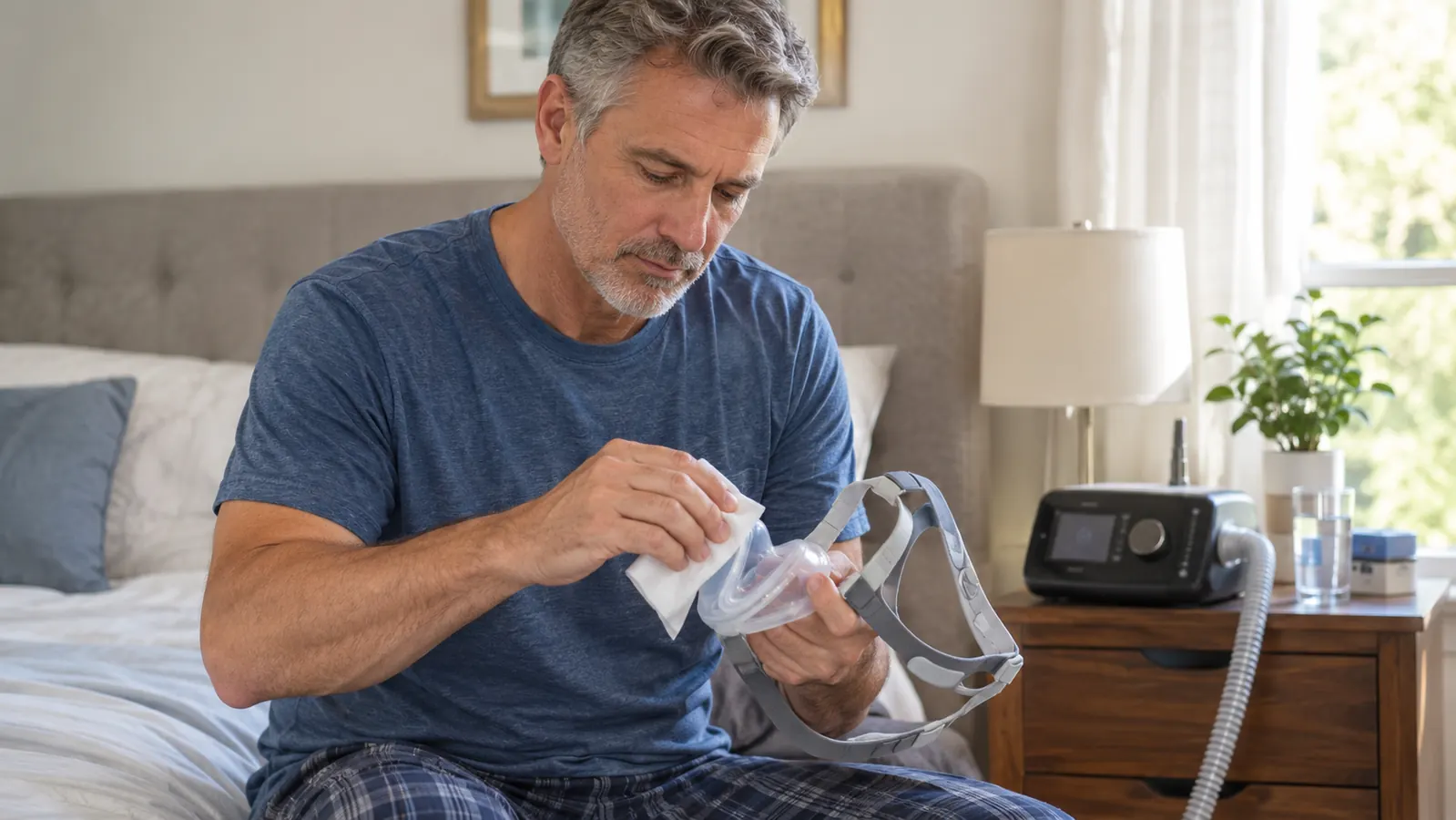
Two years ago, my doctor told me I had moderate obstructive sleep apnea and handed me a prescription for a CPAP. I had snored loud enough to send Darlene to the couch most nights for years, so I was ready to try anything. What nobody told me was that the machine is the easy part. The mask is the part that decides whether you actually keep using it, and a mask that is not cleaned every morning is a mask that leaks, smells, and makes your skin break out. I learned that the hard way, and then I learned a two-minute routine that fixed it.
I am Wendell Graves, a retired electric utility lineman from outside Knoxville, Tennessee. I have used a CPAP every night for two years, and for the last eight months I have wiped my mask down every single morning with the unscented CPAP mask wipes from RespLabs Medical Inc. This is the routine I actually follow, the mistakes I made before I got it right, and why I think the wipe-down is the single most important habit in CPAP ownership.
Start tomorrow morning with a clean mask
One unscented, alcohol-free wipe each morning removes the facial oils and dead skin that make a CPAP cushion break down. A 110-count packet lasts about three months.
Amazon Check Today's Price on Amazon →Step 1: Keep the wipes on your nightstand
The first thing I figured out is that the wipes have to be where you take the mask off, not in the bathroom cabinet. I kept my first packet in the bathroom, and I skipped the wipe-down at least three mornings a week because I was already walking to the kitchen to start coffee. The morning routine only works if it takes less effort than skipping it.
Now the packet lives on my nightstand, right next to the CPAP machine. The RespLabs Medical Inc. wipes come in a simple packet that I open at the top and pull one from each morning. It takes two seconds. If you use a bedside table, put the packet there. If you travel, throw the whole packet in your bag. The container is 6.93 x 3.74 x 3.74 inches and weighs about 15.17 ounces, so it is not a burden to move. I measured it against the corner of my nightstand the first week I had it, and it fits in the space where I used to keep a glass of water.
Step 2: Wipe the cushion first, while it is still on the frame
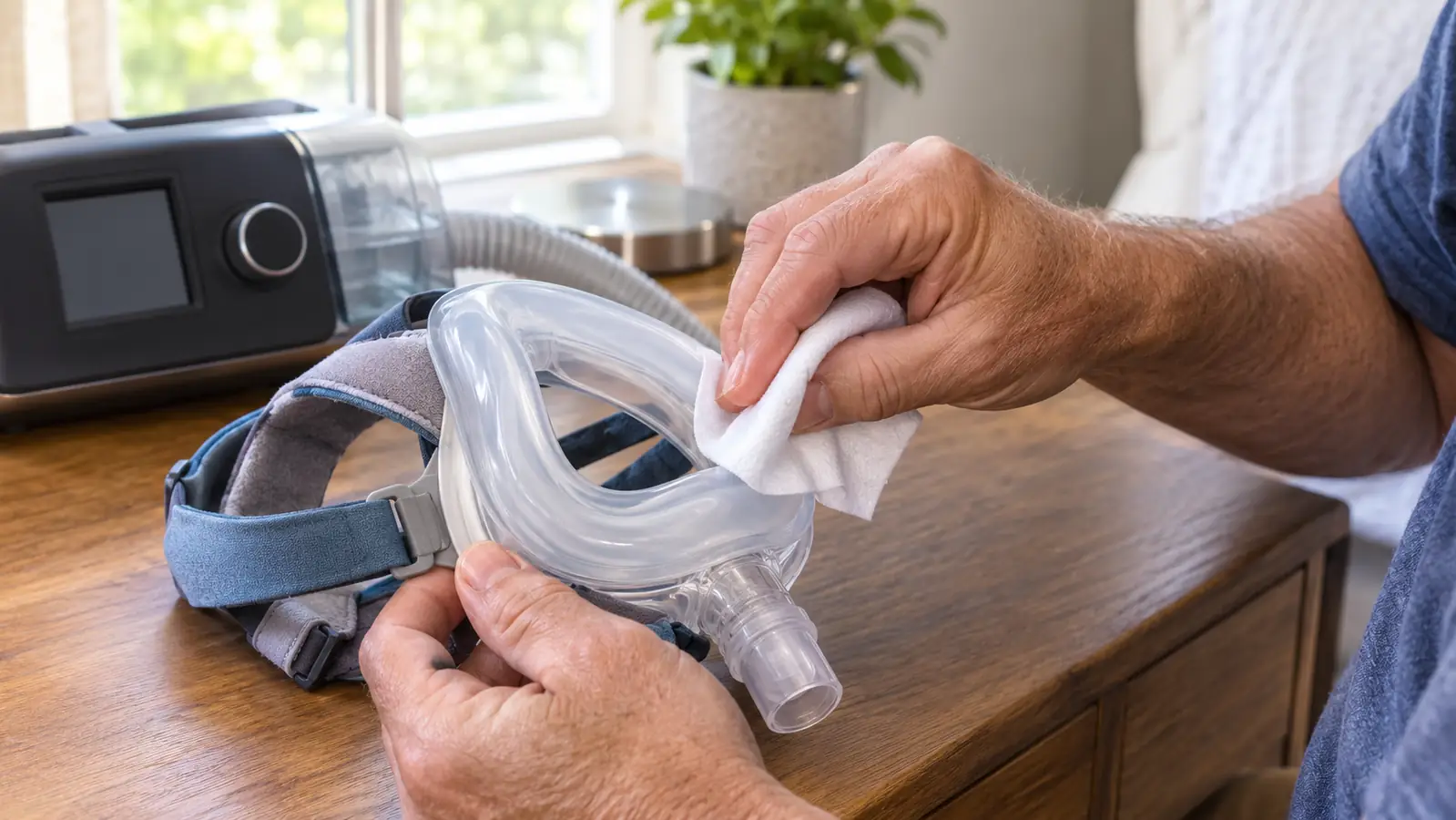
When the alarm goes off, I sit up, take the mask off, and wipe the silicone cushion before I do anything else. I hold the mask in one hand and run the wipe over the whole cushion with the other, paying attention to the part that touches my face and the little openings where moisture collects. The whole thing takes about thirty seconds. On a typical morning, I am still half asleep, so I keep the motion simple: one pass around the cushion, one pass over the nose area, one pass around the edges.
I wipe the cushion first because it is the part that touches my skin all night. Facial oils and dead skin build up on it, and that buildup is what makes a cushion get stiff and start leaking. RespLabs Medical Inc. makes these wipes specifically for silicone cushions and frames, and they list the AirFit and DreamWear lines by name, so I do not worry about the wipe damaging the material. They are unscented and alcohol-free, which matters to me because my nose is often stuffy and I do not want any scent or stinging near my face. The first time I used a scented wipe from another brand, I ended up with a headache by noon, and that was the day I decided unscented was the only kind I would buy.
The first few weeks I used the wipes, I made the mistake of wiping the cushion with a dry corner of the wipe first, then using the wetter part. It did not matter much, but I found the wipe works best when I fold it once and use the folded edge along the crease where the cushion meets my nose. That crease is where the oils collect, and it is also where leaks start. A thirty-second pass with the folded edge keeps that crease clean without me having to scrub.
Step 3: Wipe the frame and the vents
Once the cushion is done, I flip the mask over and wipe the frame, the elbow, and the vent area. This takes another twenty seconds. Moisture from your breath collects in the vents overnight, and if you skip this part, that moisture sits there until night. I have found that a frame wiped down in the morning feels dry and ready by bedtime, while a frame I skipped feels damp and slightly sticky. One morning last March I was running late and wiped only the cushion. That night the mask felt slick against my face, and I could smell the faint sour odor of a day-old damp frame. I have not skipped the frame since.
The wipes are no-lint and leave no residue or film, which is the reason I trust them on the frame. A wipe that left a film would just trade one problem for another. I also use the same wipe to give the outside of the mask a quick pass before I toss it. One wipe handles the whole mask, and at 110 wipes per packet, that works out to roughly a 90-day supply at one wipe per morning. I started the first packet on the first Monday of March, and the last wipe came out of that packet near the end of May, so the math held up in real life, not just on the label.
One more thing about the frame: I do not take the mask apart for the daily wipe. The whole point of the morning routine is that it is fast. Taking the cushion off the frame, wiping each piece separately, and snapping it back together turns a two-minute job into a ten-minute job, and ten-minute jobs get skipped. I save the full disassembly for the weekly deeper clean, and the daily wipe keeps things fresh enough that the weekly clean is never gross.
Step 4: Let the mask air dry on the nightstand
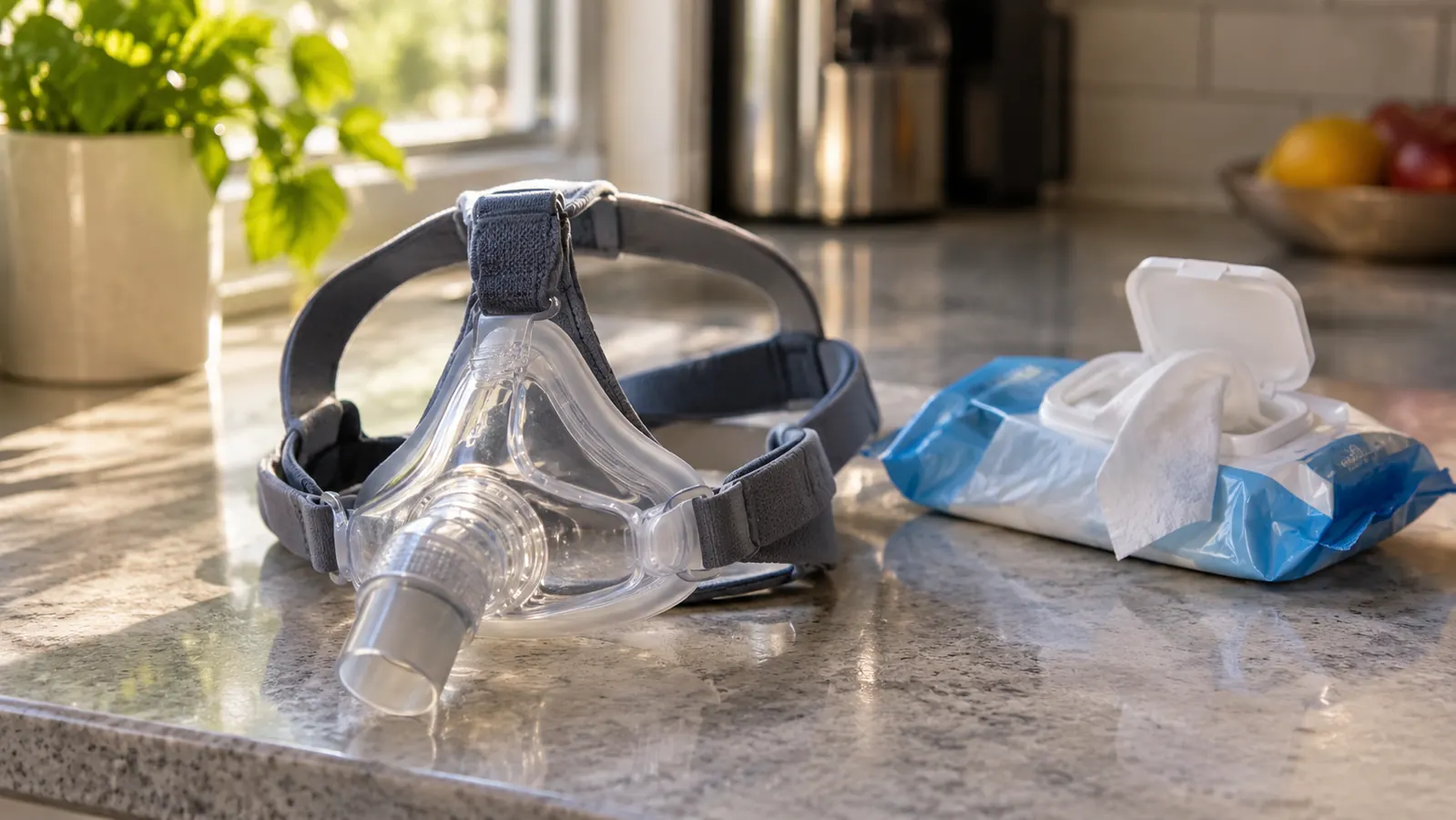
After the wipe-down, I set the mask on the nightstand with the cushion facing up and let it air dry while I get ready. This takes five minutes, maybe ten. The wipes do not leave much moisture behind, but giving the mask a few minutes to dry completely means no water sits in the openings all day. I usually wipe the mask, set it down, and then go brush my teeth. By the time I am back in the bedroom to grab my boots, the cushion is dry.
I used to put the mask straight back on the machine after wiping it, and I noticed the inside of the cushion still felt a little damp at bedtime. Now I leave it out in the open air, and it is dry every single night. It is a small change, but it is the difference between a mask that feels fresh and a mask that feels like it has been sitting in a drawer. The same rule applies when I travel: I wipe the mask, set it on the hotel nightstand, and pack it only after it has had a few minutes to dry.
If you are short on space, a washcloth laid flat on the nightstand works as a drying spot, but I found the mask dries fastest when the cushion is propped up so air can get underneath. I rest the bottom edge of the frame on the nightstand and let the cushion angle up. It looks a little odd, but it dries in about five minutes, and I never have to think about it again until bedtime.
Step 5: Store it out of direct sunlight
Silicone breaks down in heat and sunlight, so I keep my mask on the nightstand, out of the window light. The bedroom faces east, and the morning sun hits the far side of the room, not the nightstand. That is enough. If you have a sunny windowsill near your bed, pick a different spot. I learned this the hard way with an old mask I kept on a hook by the window; after a summer of morning sun, the cushion turned tacky and started leaking around my nose.
This is also the step where I check the cushion for wear. Once a month I look at the cushion in good light to see if it is getting stiff, discolored, or cracked. A clean cushion lasts longer, and RespLabs Medical Inc. says the same thing on the packet: a clean cushion lasts longer. When the cushion finally wears out, I replace it, but the daily wipe-down has stretched the life of mine considerably. My first cushion, before I started wiping it daily, needed replacing after about four months. The one I have now has been going for eight months and still seals.
I also rotate between two masks on alternating nights, which gives each cushion an extra day to air out. That is not something you have to do, and it is not something the wipes require. It is just a habit that works for me. If you only have one mask, the morning wipe-down and air dry are enough to keep the silicone in good shape.
What Else Helps
The morning wipe-down is the habit that matters most, but a few other things make the whole routine easier. I empty the water chamber every morning and leave it open to dry. I wash the tubing once a week in warm, soapy water and hang it over the shower rod. And I replace my filter on the schedule the machine tells me. None of that is hard, and none of it works as well if the mask itself is not clean. I do the tubing wash on Saturday mornings, usually with my first cup of coffee cooling on the counter, and it takes about ten minutes from start to finish.
I also keep a spare packet of the wipes in my travel bag, because hotel sinks and bar soap are a poor substitute for a proper wipe. When I travel, I do the exact same morning routine on the hotel nightstand. The mask comes off, gets wiped, air dries, and goes back in the bag before breakfast. It keeps the routine consistent, and consistency is what keeps a CPAP user from giving up on the machine. My brother-in-law tried CPAP twice and quit both times because the cleaning felt like a second job. When I showed him this two-minute routine, he said it was the first time the whole thing sounded doable.
One thing I will warn you about: do not use paper towels or regular cloths on the cushion. They can leave lint and tiny scratches that hold onto oils. The RespLabs Medical Inc. wipes are made to be no-lint, and that is not a marketing detail. It is the difference between a cushion that stays smooth and one that feels rough after a few months.
The morning wipe-down takes two minutes. Skipping it costs you a mask that leaks, a cushion that wears out early, and a face that breaks out. I know which one I would rather deal with.
What I'd Tell You If We Were Sitting at My Kitchen Table
If you are new to CPAP, or if you have been using one for years and still dread the cleaning, here is my honest advice. The daily wipe-down is not a chore you have to schedule. It is a two-minute habit that you attach to the moment you take the mask off, and it makes every other part of CPAP easier. The mask fits better, the cushion lasts longer, and you do not have to scrub a week of buildup out of the vents on Sunday morning. I know because I spent my first year doing exactly that, scrubbing on Sundays and wondering why the mask never felt quite right.
I have tried the soap-and-water route, and I still do a deeper clean now and then. But soap and water is not something you can do at the bedside at 6:15 in the morning, and it is not something you can do in a hotel room. The wipes are the reason I have been able to clean my mask every single day for eight months instead of once a week. That consistency is what I would want for anyone who is trying to make CPAP work. If you take one thing from this, let it be this: keep the wipes next to the machine, wipe the mask the moment you take it off, and let it dry before you put it away.
And if you are the partner of someone who uses a CPAP, like Darlene is for me, you can help by not moving the wipes. I am only half joking. The routine works because the packet stays in the same spot every day. The day Darlene tidied the nightstand and put the packet in the bathroom drawer, I skipped the wipe-down that night and woke up with a mask that did not seal. She put it back the next morning, and we have not moved it since.
Make the wipe-down part of your morning
One packet of RespLabs Medical Inc. unscented CPAP wipes gives you about 110 mornings of clean masks. Keep it on the nightstand and make the habit stick.
Amazon Check Today's Price on Amazon →